

UNITED NATIONS — Saturday, November 14, 2026 — Fifty countries, including India, have joined a joint diplomatic call urging Israel’s incoming government to allow rapid and unimpeded humanitarian access into Gaza, warning that displaced families face hypothermia and disease as winter sets in without adequate shelter, fuel and medical supplies.
The call to action, endorsed at a media stakeout at the United Nations on Thursday, was led by Jordan, Qatar and the United Kingdom, with the joint statement delivered by Britain’s ambassador to the UN, Sarah MacIntosh. India’s deputy permanent representative, Ambassador Yojna Patel, joined the stakeout, and India’s mission later reiterated New Delhi’s position that safe, sustained and unhindered assistance must reach civilians, especially women and children.
Corridors through Egypt and Jordan
The countries urged Israel to facilitate humanitarian corridors through Egypt and Jordan and to approve the entry of critical supplies, including shelter materials, fuel, water, sanitation equipment and medicines. The statement also called for medical referral routes to hospitals in East Jerusalem and the West Bank to be restored, and for health workers, facilities and medical transport to be protected under international humanitarian law.
Signatories committed to supporting winterisation efforts in Gaza, providing shelter, water, sanitation and health supplies to reduce suffering and limit public health risks as temperatures fall.
Tents stranded as storms hit
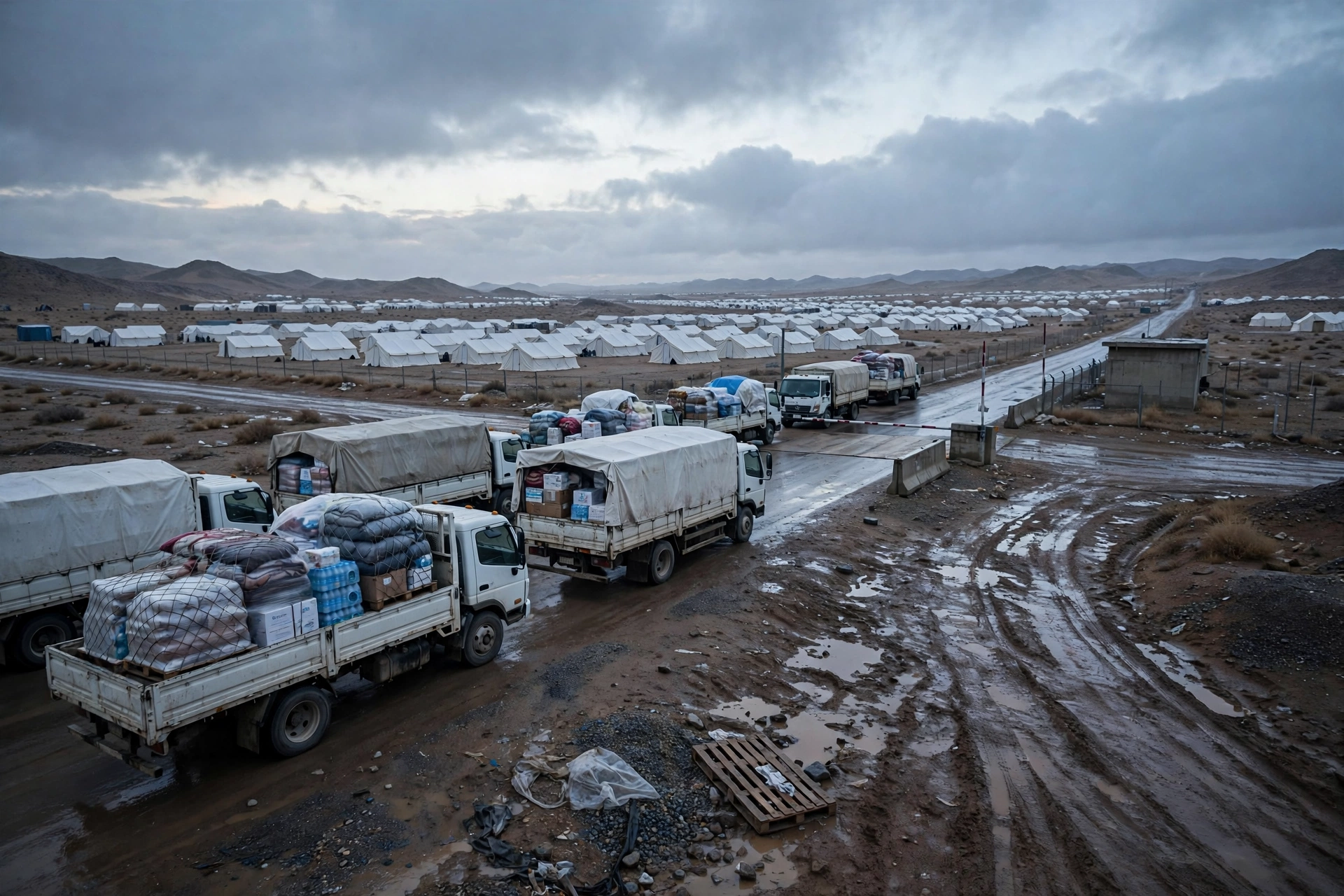
The appeal comes as winter weather is already battering the territory. The UN’s humanitarian office said in its November 13 situation report that about 46,000 households had been affected by heavy rainfall and more than 40,000 shelters damaged. The UN has said more than 150,000 tents are stranded outside Gaza awaiting Israeli permission to enter, while weekend flooding has worsened the sanitation crisis for families living in tents and damaged buildings.
Britain’s ambassador warned that, since the October 2025 ceasefire, progress had been possible when political will allowed it, but that far too many people in Gaza remained without adequate shelter and risked exposure to hypothermia, respiratory infections, waterborne diseases and other preventable illnesses.
Israel rejects the criticism
Israel rejected the thrust of the criticism, with officials saying attacks on COGAT, the defence ministry body that oversees aid deliveries, distracted from Hamas’s responsibility for the situation in Gaza. The dispute over how much aid is entering the territory, and how quickly, remains contested.
The joint statement follows Israel’s recent elections, and the signatories said they were reiterating their call to the incoming government to allow and facilitate rapid and unimpeded humanitarian access throughout Gaza and through all available crossings and land routes.