

DUBAI, November 16, 2026 — The United States has moved a third aircraft carrier strike group into the Middle East, giving Washington its largest concentration of naval air power in the region since the war with Iran began in February, as Tehran warned it would not wait for an American attack before responding.
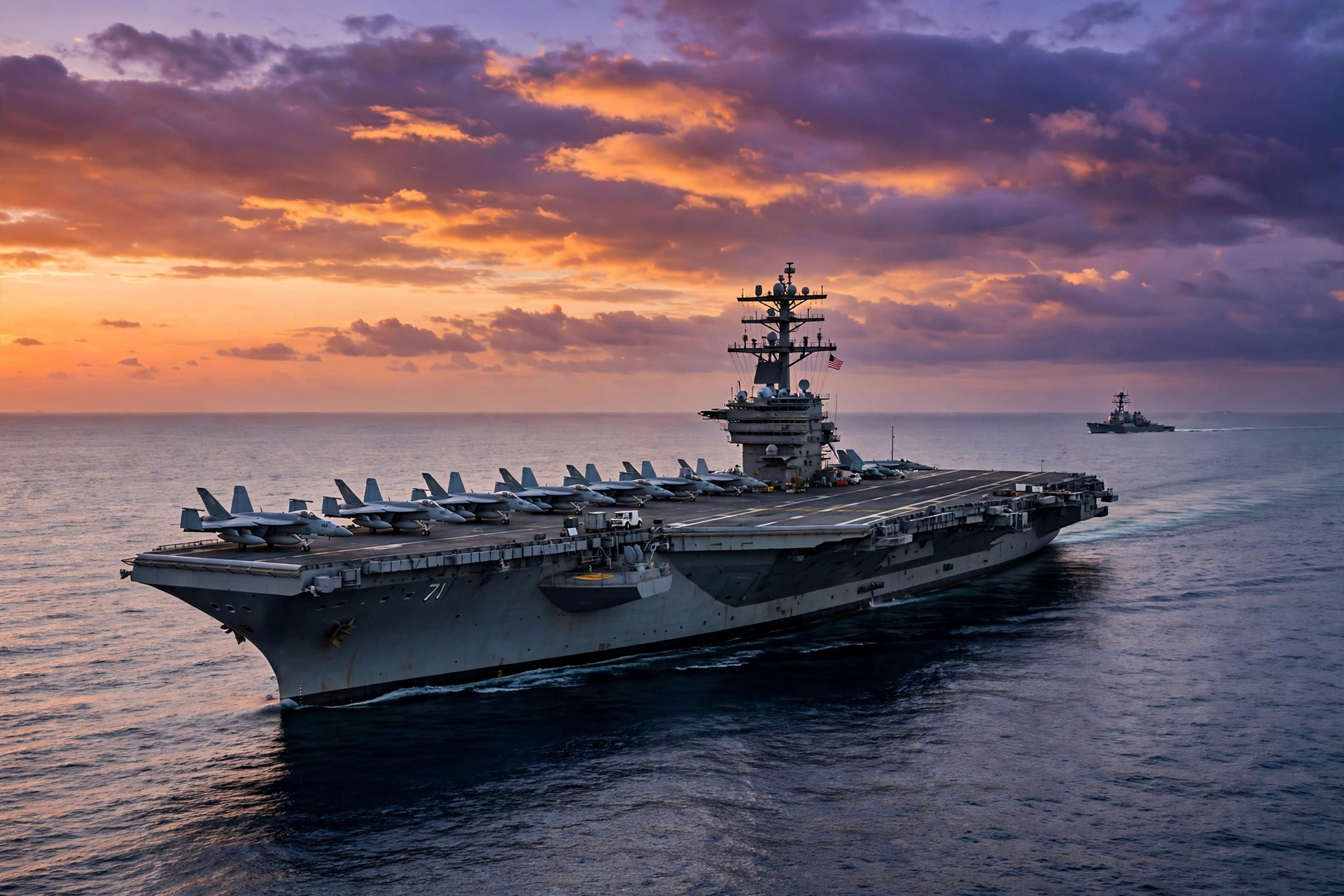
The USS Theodore Roosevelt entered the area of operations of US Central Command on Sunday, a US official told reporters, joining the USS George H.W. Bush and the USS George Washington, which are already operating in the Arabian Sea. The arrival was first reported by ABC News and confirmed to The National by a US official, although Central Command has not formally announced the deployment.
A third carrier joins the blockade
The Roosevelt strike group sails with Carrier Air Wing 11, the guided-missile cruiser USS Chosin and the destroyers USS Paul Hamilton and USS Decatur, carrying more than 5,000 personnel. The carrier left San Diego on September 27 and sailed west through the Strait of Malacca in early November.
The three carrier strike groups are part of a larger American naval deployment of more than 20 warships enforcing a blockade of Iranian ports, imposed on April 13 after nuclear negotiations collapsed, six weeks after US and Israeli strikes opened the war on February 28. It remains unclear whether the Roosevelt will reinforce the deployment or relieve one of the two carriers already in the region.
Bahrain attacks and a warning from Tehran
The carrier’s arrival comes a day after Iran claimed a drone attack on a US helicopter base in Bahrain, its second strike on the Gulf state in three days. The Revolutionary Guard Corps said six drones targeted an air-defence radar system at the Al-Riffa base, but US officials said American forces intercepted two drones and denied the radar was damaged. Bahrain’s military said its air defences destroyed the drones and reported no casualties.
The United Arab Emirates condemned the renewed Iranian attack on Bahrain, the US Embassy in Bahrain issued a security alert, and the Group of Seven nations strongly condemned Iran’s attacks on neighbouring countries and the continued Houthi strikes on Saudi Arabia.
Late on Sunday, Iranian Deputy Foreign Minister Kazem Gharibabadi said Tehran “will not wait for the US to attack first” before responding, underlining how close the region stands to a new round of fighting. The warning followed days of tit-for-tat strikes, with Houthi forces claiming attacks on Saudi oil facilities and airports and the Saudi-led coalition reporting interceptions over Riyadh, Mecca, Medina and the Eastern Province.
Diplomacy still open, for now
Despite the build-up, diplomatic channels have not closed. President Donald Trump sees “positive momentum” on Iran after talks with the Qatari prime minister, according to reports, and sources said he may hold off on further attacks barring new provocations.
The Roosevelt sharpens both sides of the standoff: Washington can now strike or enforce its blockade with overwhelming force, while Tehran has signalled it will treat any attack as already under way. With three carrier strike groups in the region, the margin for miscalculation in the Gulf has rarely been thinner.