


RIYADH — Sunday, October 25, 2026. Saudi air defences intercepted 10 ballistic missiles over southern Saudi Arabia on Sunday, the Saudi-led coalition said, as emergency alerts sounded across Riyadh, Abha and Khamis Mushait and residents reported explosions shaking buildings in the south.
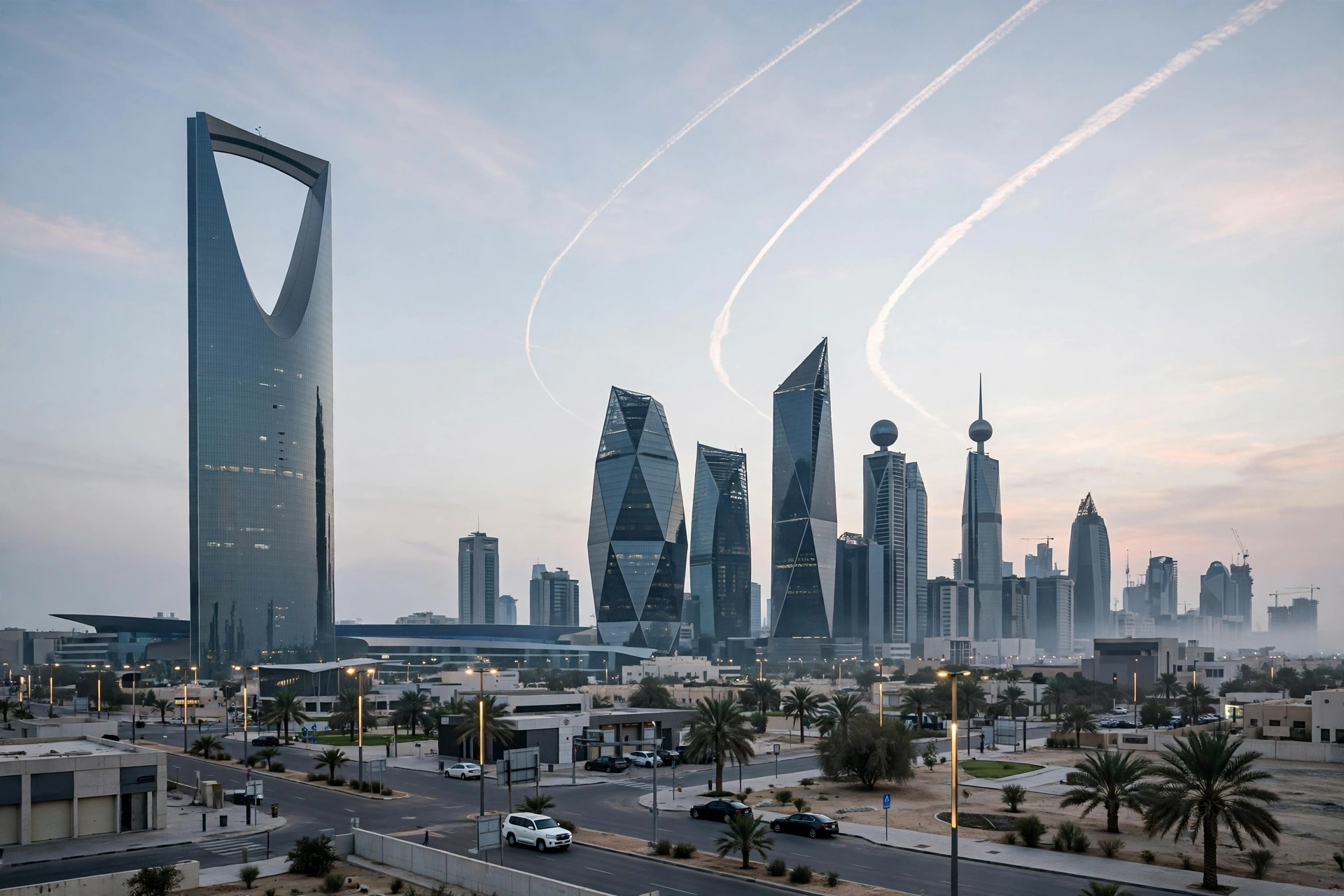
The barrage came on the very day King Khalid International Airport resumed flights after a two-week closure, underscoring how quickly the kingdom’s fragile return to normal air travel collided with a renewed wave of attacks from Yemen’s Houthis.
Alerts across three regions
Saudi civil defence authorities issued emergency alerts for Riyadh, Abha and Khamis Mushait on Sunday morning, before announcing minutes later that the immediate danger had passed, state media reported.
The coalition said two drones and a ballistic missile were launched towards Riyadh, and a cruise missile towards Khamis Mushait. It later said it had intercepted 10 ballistic missiles fired towards southern Saudi Arabia.
A resident of Khamis Mushait, speaking on condition of anonymity, described a morning of heavy bombardment. “The bombardment has been very heavy since this morning — may God keep us safe,” the resident said. “Everything is shaking because of the explosions.”
There were no immediate official reports of casualties from Sunday’s interceptions. Civil defence teams routinely warn residents to stay clear of falling debris.
Airport reopening under threat
King Khalid International Airport said flights would resume on Sunday, with Terminal 1 designated for domestic flights and Terminal 2 for international flights operated by national carriers. Flight-tracking data showed a plane departing Riyadh early on Sunday bound for Jeddah.
The airport had halted operations on October 10 following an attack claimed by the Houthis that killed 13 people and wounded more than 300 others, the deadliest attack in the kingdom in more than a decade, according to Saudi authorities.
Houthi military spokesman Yahya Saree warned again on Sunday that the airport remained a military target. “The Yemeni Armed Forces warn all international, regional, and local airlines — as well as staff and travellers — against using King Khalid Airport in Riyadh, as it is unsafe and serves as a military target for our forces,” he said.
The Houthis said they had attacked the airport and Saudi oil facilities on Saturday, including airports in Riyadh, Dammam and Najran, as well as the Khamis Mushait air base and the East-West crude pipeline. Saudi authorities did not comment directly on those claims.
Airlines remained cautious. Etihad Airways said it had cancelled Abu Dhabi–Riyadh and Abu Dhabi–Dammam flights until November 5, citing the dynamic security situation. Air India had earlier suspended Riyadh and Dammam flights until November 7.
A war widening beyond Yemen
The fighting has intensified since a years-long truce between the Houthis and Yemen’s Riyadh-backed government broke down in the summer, turning Saudi Arabia into a pressure point in the wider United States-Israeli war against Iran that erupted in February.
Saudi Arabia leads the military coalition fighting the Iran-backed Houthis, who have carried out waves of strikes on Saudi airports, energy sites and military bases in recent weeks.
On Saturday, Saudi civil defence said fragments from two intercepted missiles fell in the Mecca and Medina regions. The Houthis denied targeting the holy cities.



[…] ratification comes as Saudi Arabia faces a sustained campaign of Houthi missile and drone attacks on its airports, energy infrastructure and cities, including this week’s deadly strike on […]