


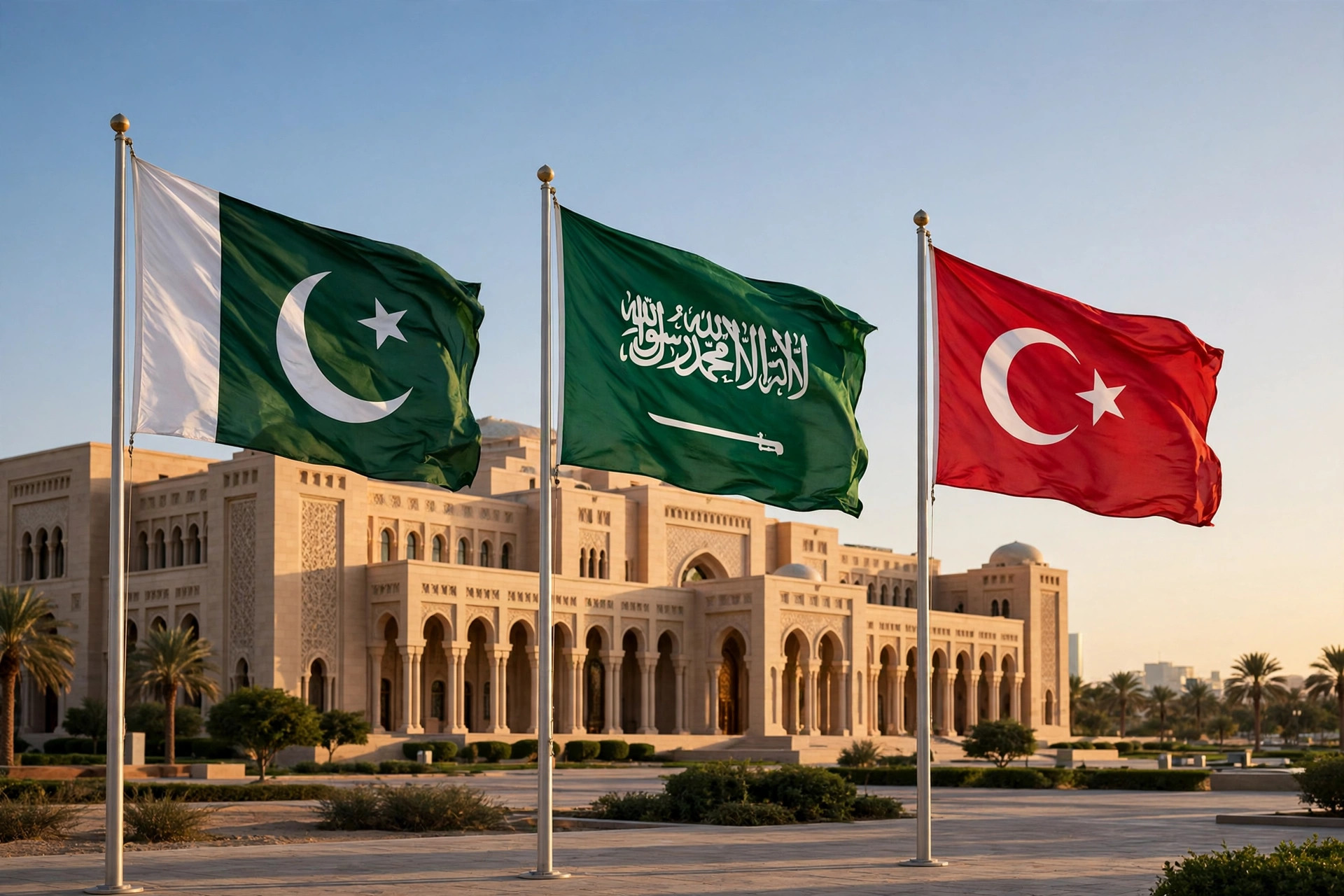
Pakistan and Saudi Arabia Complete Ratification of Makkah Joint Defence Pact as Türkiye’s Parliament Takes Up the Accord
ISLAMABAD — October 24, 2026. Pakistan and Saudi Arabia have completed their ratification of the Makkah Joint Defence Agreement, the trilateral defence pact signed in August by the two countries and Türkiye, Pakistan’s Foreign Office confirmed on Friday, leaving Ankara’s parliamentary process as the final step before the accord is fully in force.
Foreign Office spokesperson Sajjad Haider Khan told reporters at the weekly press briefing in Islamabad that each country was following its own constitutional and legal procedures for approving the agreement, and that Islamabad and Riyadh had now finished theirs. Türkiye, he said, was undertaking the requisite legal procedures in accordance with its domestic legal framework.
No hidden provisions, FO insists
Asked whether the agreement contained any undisclosed clauses, particularly in view of Pakistan’s separate bilateral defence agreement with Saudi Arabia, Khan was emphatic. The pact comprises 16 articles and contains no hidden provisions, he said, adding that Pakistan endorsed the text released by the Turkish parliament and reported in the media.
“There are no hidden provisions; the agreement is explicit and clear in its provisions and articles,” Khan stressed, according to state media reports of the briefing.
He said questions concerning ratification and operationalisation were being discussed through the trilateral Strategic Political and Defence Committee, whose latest meeting was held in Riyadh on October 5.
What the pact commits its members to
The Makkah Joint Defence Agreement was signed on August 7 at Al-Safa Palace in Makkah by Saudi Crown Prince and Prime Minister Mohammed bin Salman, Turkish President Recep Tayyip Erdogan and Pakistani Prime Minister Shehbaz Sharif, following an invitation from Saudi King Salman.
Under its central provision, an armed attack against the independence, sovereignty or territorial integrity of any one party is to be treated as an attack on all three, with the parties committed to taking necessary measures for mutual assistance. The agreement also covers closer cooperation between the three armed forces, including interoperability, readiness and joint efforts against terrorism.
Khan emphasised the defensive character of the pact, saying it is consistent with the United Nations Charter and aimed at promoting regional peace, security and stability.
Türkiye’s step still to come
Türkiye submitted the agreement to its parliament on October 20, and parliamentary consideration was expected to begin in the coming days, though officials have cautioned that approval could extend beyond that timetable. Until Ankara completes its own process, the pact cannot be said to be fully enacted, even though two of its three signatories have now ratified it.
Why it matters now
The ratification comes as Saudi Arabia faces a sustained campaign of Houthi missile and drone attacks on its airports, energy infrastructure and cities, including this week’s deadly strike on Dammam airport. The October 5 Riyadh committee meeting had already moved the pact from paper toward practice, agreeing on the rapid deployment of forces to the Kingdom.
For Riyadh, the completed ratification by Pakistan cements a formal security guarantee from one of the Muslim world’s largest militaries. Whether Türkiye’s parliament now moves quickly will decide how soon the Makkah pact becomes a fully operating alliance rather than a signed promise.