


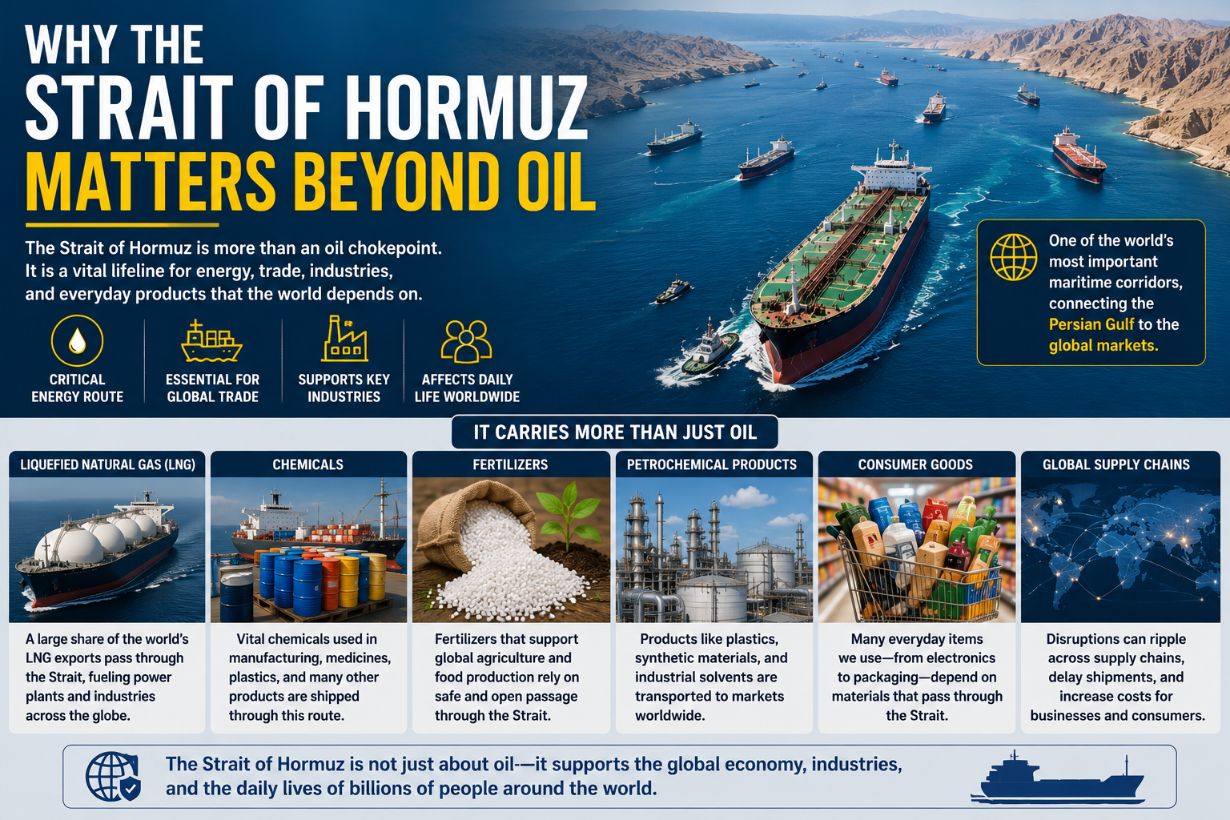
The Strait of Hormuz is one of the world’s most strategic waterways. Located between Iran and Oman, this narrow sea passage connects the Persian Gulf to the Gulf of Oman and the Arabian Sea. Although it is only a few kilometers wide at its narrowest point, it plays a major role in global trade and energy security.
Millions of barrels of crude oil and liquefied natural gas (LNG) pass through the Strait of Hormuz every day. Because of this, any disruption in the area can have a direct impact on oil prices, shipping routes, and the global economy.
Where Is the Strait of Hormuz?
The Strait of Hormuz lies between southern Iran and the Musandam Peninsula of Oman. It serves as the only sea route for many Gulf countries, including Saudi Arabia, Kuwait, Iraq, Qatar, Bahrain, and the United Arab Emirates, to export oil to international markets.
Its geographic location makes it one of the busiest maritime routes in the world.
Why Is the Strait of Hormuz Important?
The importance of the Strait of Hormuz goes far beyond the Middle East.
- It carries a significant share of the world’s oil exports.
- It is a key route for LNG shipments.
- It connects Gulf countries with Asian, European, and American markets.
- It supports international trade and global energy supplies.
Because of these factors, governments and businesses around the world closely monitor developments in the region.
Also Read: what is opec
Strait of Hormuz Disruptions Could Worsen Access to Fertilizers for Some of the Poorest Countries
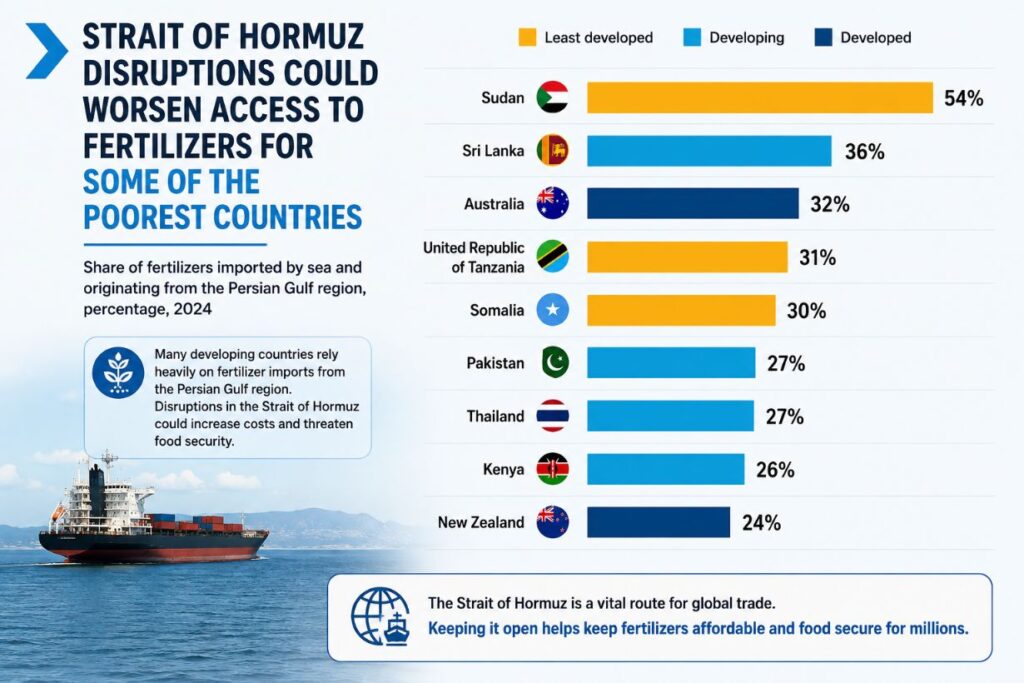
The Strait of Hormuz is a critical trade route for more than just oil and natural gas. It also plays a vital role in transporting fertilizers from the Persian Gulf to countries across Asia, Africa, and other regions. Millions of farmers depend on these shipments to maintain agricultural production and support food security.
If shipping through the Strait of Hormuz is disrupted, fertilizer supplies could be delayed, transportation costs may rise, and global prices could increase. Such disruptions would have the greatest impact on low-income and developing countries that rely heavily on fertilizer imports from the Gulf region.
Nations including Sudan, Sri Lanka, Tanzania, Somalia, Pakistan, Kenya, and Thailand import a significant share of their fertilizers through this maritime corridor. Any prolonged interruption could reduce the availability of essential agricultural inputs, making it more difficult for farmers to grow crops efficiently.
Higher fertilizer prices can also contribute to lower crop yields, increased food costs, and greater economic pressure on vulnerable communities. For countries already facing food security challenges, maintaining uninterrupted access to fertilizer supplies is essential.
As global demand for food continues to grow, ensuring safe and reliable shipping through the Strait of Hormuz remains important not only for international trade but also for agriculture, economic stability, and the livelihoods of millions of people worldwide.
Read Also: Saudi Crown Prince and Trump Hold Talks on Middle East Stability
Why the Strait of Hormuz Matters Beyond Oil
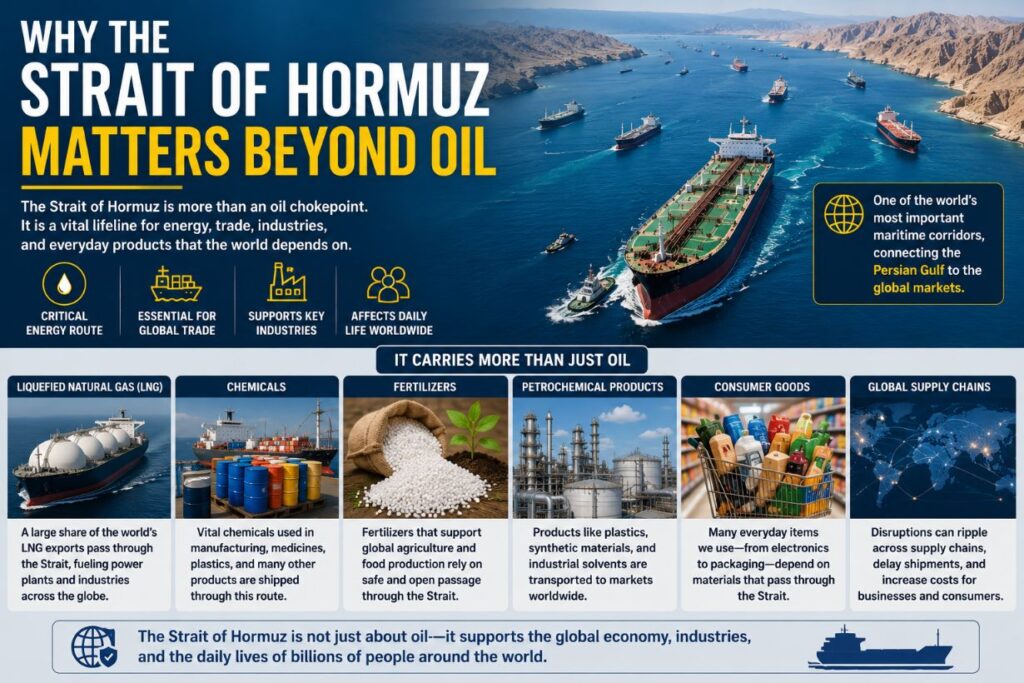
When people hear about the Strait of Hormuz, they usually think about oil tankers and rising fuel prices. While oil is a major reason this waterway is so important, its role goes much further. Every day, ships carrying a wide range of essential goods pass through the Strait, making it one of the busiest and most valuable shipping routes in the world.
Beyond crude oil, the Strait is used to transport liquefied natural gas (LNG), fertilizers, chemicals, petrochemical products, and other raw materials that are essential for industries and agriculture. These goods travel from Gulf countries to markets across Asia, Europe, and Africa, helping businesses operate and supporting millions of people around the world.
A Lifeline for Global Trade
The Strait of Hormuz is more than just an energy corridor—it’s a vital link in the global supply chain. Thousands of businesses depend on goods that move through this route. From factories producing everyday products to farmers growing crops, many industries rely on uninterrupted shipping to keep operations running smoothly.
If ships are delayed or unable to pass through the Strait, transportation costs can rise quickly. Those higher costs often affect businesses first, but they eventually reach consumers through higher prices on fuel, food, fertilizers, and other essential products.
Why Stability Matters
Keeping the Strait of Hormuz open and secure is important for the global economy. Safe shipping routes help ensure that energy supplies, agricultural products, and industrial materials continue reaching international markets without unnecessary delays.
Although the Strait is often mentioned during periods of political tension, its everyday importance lies in supporting international trade, food production, and economic stability. This is why governments, businesses, and global organizations closely monitor developments in the region and encourage peaceful solutions to protect one of the world’s most critical maritime corridors.
Can the Global Economy Be Affected?
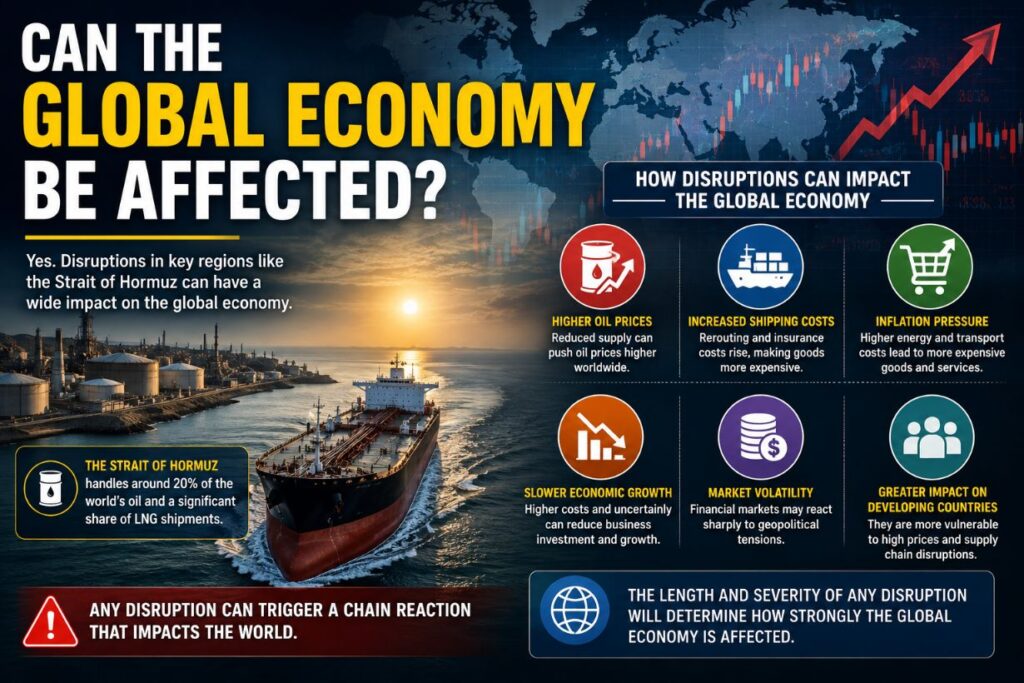
Experts say the overall impact depends on how long any disruption lasts. Short-term tensions may cause temporary increases in energy prices, while prolonged instability could slow global trade, increase inflation, and affect economic growth in many regions. For this reason, governments continue to emphasize diplomacy and secure international shipping routes
Strait of Hormuz Frequently Asked Questions (FAQs)
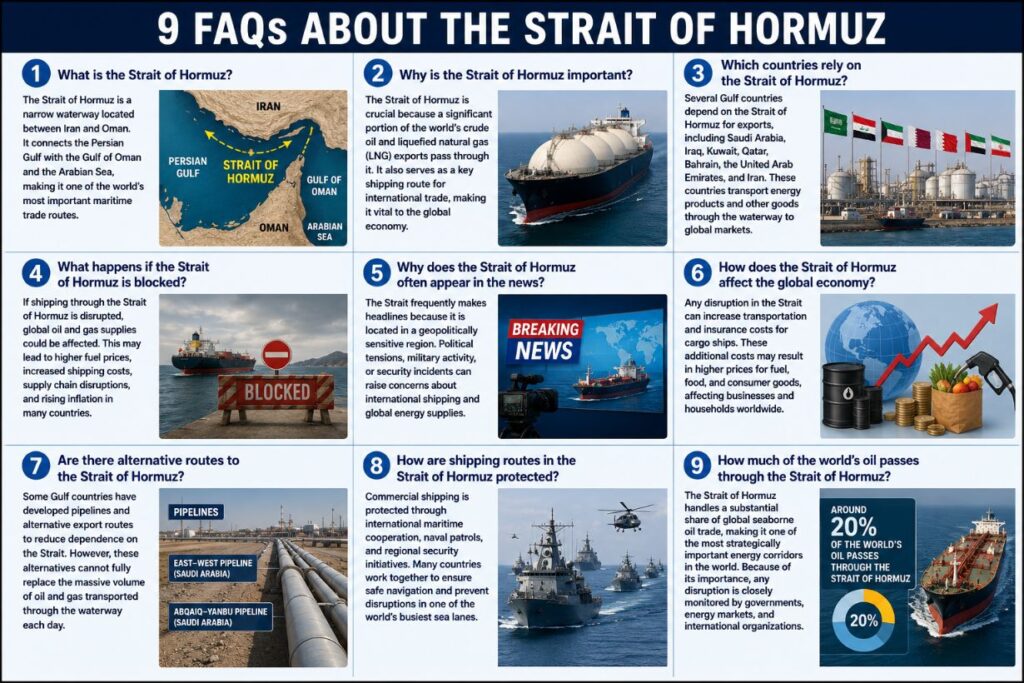
1. What is the Strait of Hormuz?
The Strait of Hormuz is a narrow waterway located between Iran and Oman. It connects the Persian Gulf with the Gulf of Oman and the Arabian Sea, making it one of the world’s most important maritime trade routes.
2. Why is the Strait of Hormuz important?
The Strait of Hormuz is crucial because a significant portion of the world’s crude oil and liquefied natural gas (LNG) exports pass through it. It also serves as a key shipping route for international trade, making it vital to the global economy.
3. Which countries rely on the Strait of Hormuz?
Several Gulf countries depend on the Strait of Hormuz for exports, including Saudi Arabia, Iraq, Kuwait, Qatar, Bahrain, the United Arab Emirates, and Iran. These countries transport energy products and other goods through the waterway to global markets.
4. What happens if the Strait of Hormuz is blocked?
If shipping through the Strait of Hormuz is disrupted, global oil and gas supplies could be affected. This may lead to higher fuel prices, increased shipping costs, supply chain disruptions, and rising inflation in many countries.
5. Why does the Strait of Hormuz often appear in the news?
The Strait frequently makes headlines because it is located in a geopolitically sensitive region. Political tensions, military activity, or security incidents can raise concerns about international shipping and global energy supplies.
6. How does the Strait of Hormuz affect the global economy?
Any disruption in the Strait can increase transportation and insurance costs for cargo ships. These additional costs may result in higher prices for fuel, food, and consumer goods, affecting businesses and households worldwide.
7. Are there alternative routes to the Strait of Hormuz?
Some Gulf countries have developed pipelines and alternative export routes to reduce dependence on the Strait. However, these alternatives cannot fully replace the massive volume of oil and gas transported through the waterway each day.
8. How are shipping routes in the Strait of Hormuz protected?
Commercial shipping is protected through international maritime cooperation, naval patrols, and regional security initiatives. Many countries work together to ensure safe navigation and prevent disruptions in one of the world’s busiest sea lanes.
9. How much of the world’s oil passes through the Strait of Hormuz?
The Strait of Hormuz handles a substantial share of global seaborne oil trade, making it one of the most strategically important energy corridors in the world. Because of its importance, any disruption is closely monitored by governments, energy markets, and international organizations.

[…] Read Also: What Is the Strait of Hormuz and Why Is It Important to the World? […]