


Whenever fuel prices suddenly rise or fall, the name OPEC often appears in news headlines. While many people recognize the term, few understand what OPEC actually is or why its decisions receive so much global attention.
The Organization of the Petroleum Exporting Countries, commonly known as OPEC, plays an important role in the international energy market. Its member countries are among the world’s largest oil producers, and their production decisions can influence oil supply, energy prices, and even the global economy.
Whether you are a student, investor, business owner, or simply interested in world affairs, understanding OPEC can help you better understand why energy prices change and how those changes affect everyday life.
We’ll explain everything you need to know about OPEC in simple and easy-to-understand language.
What Does OPEC Stand For?
OPEC stands for the Organization of the Petroleum Exporting Countries.
It is an international organization that brings together major oil-producing nations to coordinate petroleum policies and promote stability in global oil markets.
Instead of each country making production decisions independently, OPEC members regularly meet to discuss market conditions and decide whether oil production should increase, decrease, or remain unchanged.
The organization’s primary goal is to maintain a stable oil market that benefits both producers and consumers while reducing unnecessary price volatility.
Today, OPEC remains one of the most influential organizations in the global energy sector.
Why Was OPEC Created?
Before OPEC was established in 1960, many oil-producing countries had little influence over international oil pricing. Large multinational oil companies controlled much of the production and pricing process, leaving producing nations with limited bargaining power.
To strengthen their position, five countries—Iran, Iraq, Kuwait, Saudi Arabia, and Venezuela—came together to establish OPEC. Their aim was to protect national interests, improve cooperation, and ensure fair returns from oil exports.
Since then, the organization has expanded and evolved into one of the world’s most recognized energy organizations.
What Does OPEC Do?
Many people believe OPEC simply decides oil prices, but that’s not exactly how it works.
Instead of directly setting prices, OPEC coordinates oil production among its member countries. By adjusting production levels, the organization aims to balance global supply and demand.
Some of OPEC’s key responsibilities include:
- Coordinating oil production policies among member countries.
- Monitoring global energy demand and supply.
- Holding regular ministerial meetings.
- Promoting stability in international oil markets.
- Encouraging long-term investment in the petroleum industry.
- Supporting a reliable supply of oil to consumers around the world.
These decisions are based on market conditions, economic growth, seasonal demand, and geopolitical developments.
Read Also: What Does OPEC Stand For? Meaning, Members and Why It Matters
Which Countries Are Members of OPEC?
OPEC consists of several oil-producing countries across the Middle East, Africa, and South America.
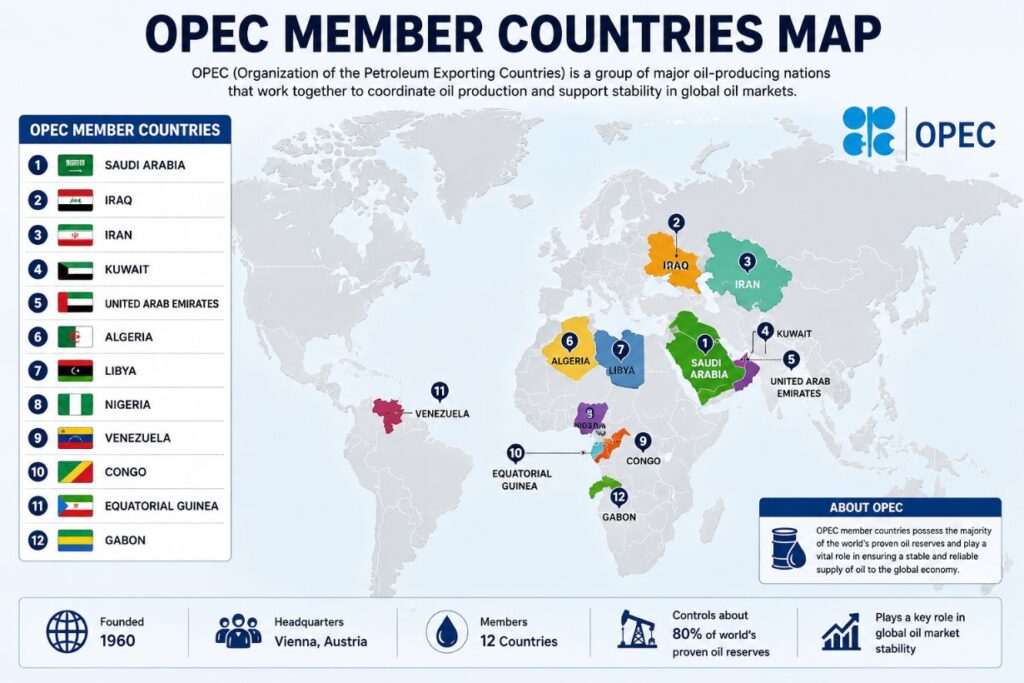
Current and recent member countries include:
- Saudi Arabia
- Iraq
- Iran
- Kuwait
- United Arab Emirates
- Algeria
- Libya
- Nigeria
- Venezuela
- Congo
- Gabon
- Equatorial Guinea
Membership can change over time as countries join or leave the organization.
Among all members, Saudi Arabia is generally considered the largest and most influential oil producer within OPEC.
How Does OPEC Influence Oil Prices?
One of the biggest misconceptions is that OPEC directly decides the price of oil.
In reality, oil prices are mainly determined by global supply and demand. However, because OPEC countries produce a significant share of the world’s crude oil, their production decisions can strongly influence the market.
When OPEC decides to reduce oil production, the available supply may become tighter. If demand remains strong, oil prices often move higher.
On the other hand, when production increases, more oil enters the market. Greater supply can help ease prices, especially if demand remains unchanged.
However, oil prices are also affected by several other factors, including:
- Global economic growth
- Political tensions
- Natural disasters
- Wars and conflicts
- Currency exchange rates
- Energy demand from major economies
This is why oil prices do not always rise or fall immediately after an OPEC announcement.
What Is OPEC+ and How Is It Different?
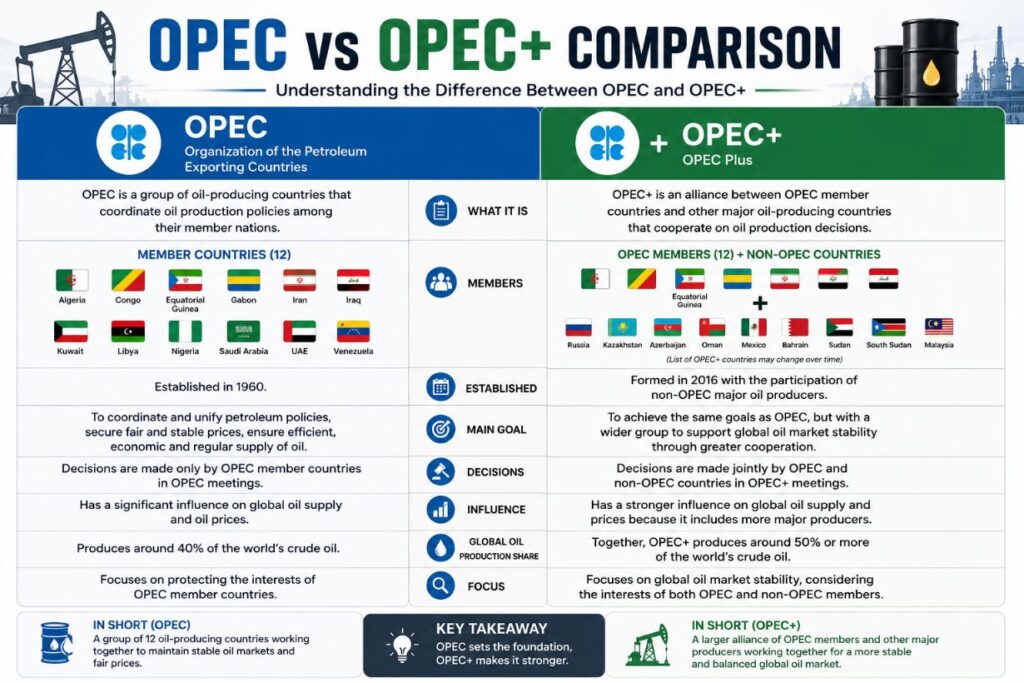
You may have also heard the term OPEC+, especially during major events affecting the global oil market.
OPEC+ is a broader alliance that includes OPEC member countries along with several major oil-producing nations that are not officially part of OPEC. These countries cooperate on oil production policies to help maintain stability in the global energy market.
The most well-known non-OPEC participant is Russia, which works with OPEC members on production decisions during important market developments.
The purpose of OPEC+ is simple: improve coordination among major oil producers and reduce extreme fluctuations in global oil prices.
Why Is OPEC Important to the Global Economy?
Oil is one of the world’s most valuable resources. It powers transportation, supports manufacturing, generates electricity in many regions, and serves as a raw material for countless products.
Because OPEC countries produce a large share of the world’s oil, their production decisions can influence many parts of the global economy.
Supporting Energy Security
Stable oil production helps countries meet growing energy demands. Reliable energy supplies are essential for industries, businesses, and households worldwide.
Influencing Global Trade
Oil is transported across continents every day. Stable oil markets help international trade move more efficiently and reduce uncertainty for businesses.
Managing Inflation
Fuel prices affect the cost of transporting goods. When transportation becomes more expensive, businesses often pass those costs on to consumers. As a result, oil prices can indirectly influence inflation in many countries.
Also Read: What Is the Strait of Hormuz and Why Is It Important to the World?
How Do OPEC Decisions Affect Everyday Life?
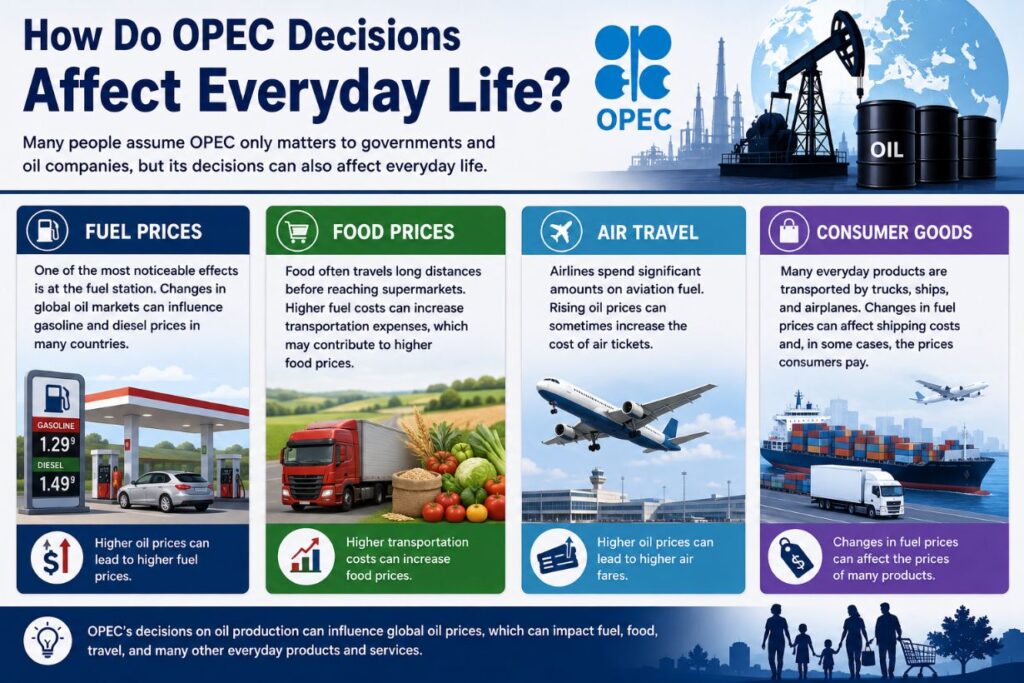
Many people assume OPEC only matters to governments and oil companies, but its decisions can also affect everyday life.
Fuel Prices
One of the most noticeable effects is at the fuel station. Changes in global oil markets can influence gasoline and diesel prices in many countries.
Food Prices
Food often travels long distances before reaching supermarkets. Higher fuel costs can increase transportation expenses, which may contribute to higher food prices.
Air Travel
Airlines spend significant amounts on aviation fuel. Rising oil prices can sometimes increase the cost of air tickets.
Consumer Goods
Many everyday products are transported by trucks, ships, and airplanes. Changes in fuel prices can affect shipping costs and, in some cases, the prices consumers pay.
Challenges Facing OPEC
The global energy industry is changing rapidly, and OPEC faces several important challenges.
Growing Renewable Energy
Many countries are investing in solar, wind, and other renewable energy sources to reduce dependence on fossil fuels.
Electric Vehicles
The increasing popularity of electric vehicles may gradually reduce future demand for oil.
Climate Policies
Governments around the world are introducing environmental policies aimed at lowering carbon emissions, creating new challenges for traditional energy producers.
Geopolitical Events
Political tensions, sanctions, and regional conflicts can quickly affect oil production and global energy markets.
The Future of OPEC
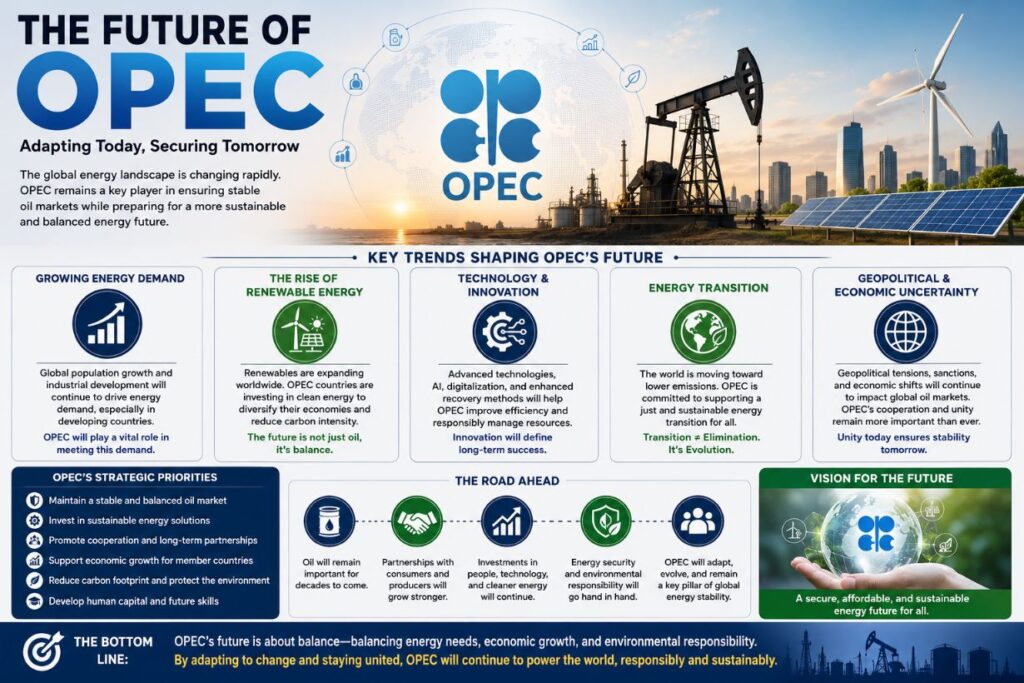
Despite major changes in the global energy sector, oil is expected to remain an important energy source for many years.
At the same time, OPEC will likely continue adapting to changing market conditions, technological developments, and the global transition toward cleaner energy.
Future decisions will focus on balancing energy demand, supporting stable markets, and responding to economic changes around the world.
Interesting Facts About OPEC
- OPEC was founded in 1960.
- It was originally established by five countries.
- The organization’s headquarters are located in Vienna, Austria.
- OPEC holds regular meetings to review global oil market conditions.
- Its decisions are closely followed by governments, investors, and financial markets around the world.
OPEC Frequently Asked Questions
What is OPEC?
OPEC is the Organization of the Petroleum Exporting Countries, an international organization that coordinates oil production policies among major oil-producing nations.
What does OPEC stand for?
OPEC stands for the Organization of the Petroleum Exporting Countries.
Why is OPEC important?
OPEC plays a major role in global energy markets by coordinating oil production, helping improve market stability, and supporting reliable energy supplies.
What is OPEC+?
OPEC+ is a partnership between OPEC members and several non-OPEC oil-producing countries that cooperate on production policies.
Which countries are members of OPEC?
Major members include Saudi Arabia, Iraq, Iran, Kuwait, the United Arab Emirates, Algeria, Libya, Nigeria, Venezuela, Congo, Gabon, and Equatorial Guinea.
Does OPEC control oil prices?
No. Oil prices are primarily determined by global supply and demand, although OPEC’s production decisions can significantly influence market conditions.
How does OPEC affect fuel prices?
Changes in oil production may influence crude oil prices, which can eventually affect gasoline, diesel, and transportation costs.
Where is OPEC headquartered?
OPEC’s headquarters are located in Vienna, Austria.
When was OPEC established?
The organization was founded in 1960.
Conclusion
OPEC remains one of the most influential organizations in the global energy industry. Although it does not directly set oil prices, its production decisions can shape energy markets, influence fuel costs, and affect economies around the world.
From transportation and manufacturing to food prices and international trade, the impact of oil extends far beyond the energy sector. Understanding how OPEC works helps explain why oil prices change and why those changes matter to businesses, governments, and everyday consumers.
As the world gradually moves toward cleaner energy sources, OPEC will continue to play a key role in balancing global oil supply while adapting to new economic and environmental challenges.


[…] Read Also: What Is OPEC and Why Is It Important? […]
[…] Read Also Details Article: What Is OPEC and Why Is It Important? A Complete Beginner’s Guide […]