


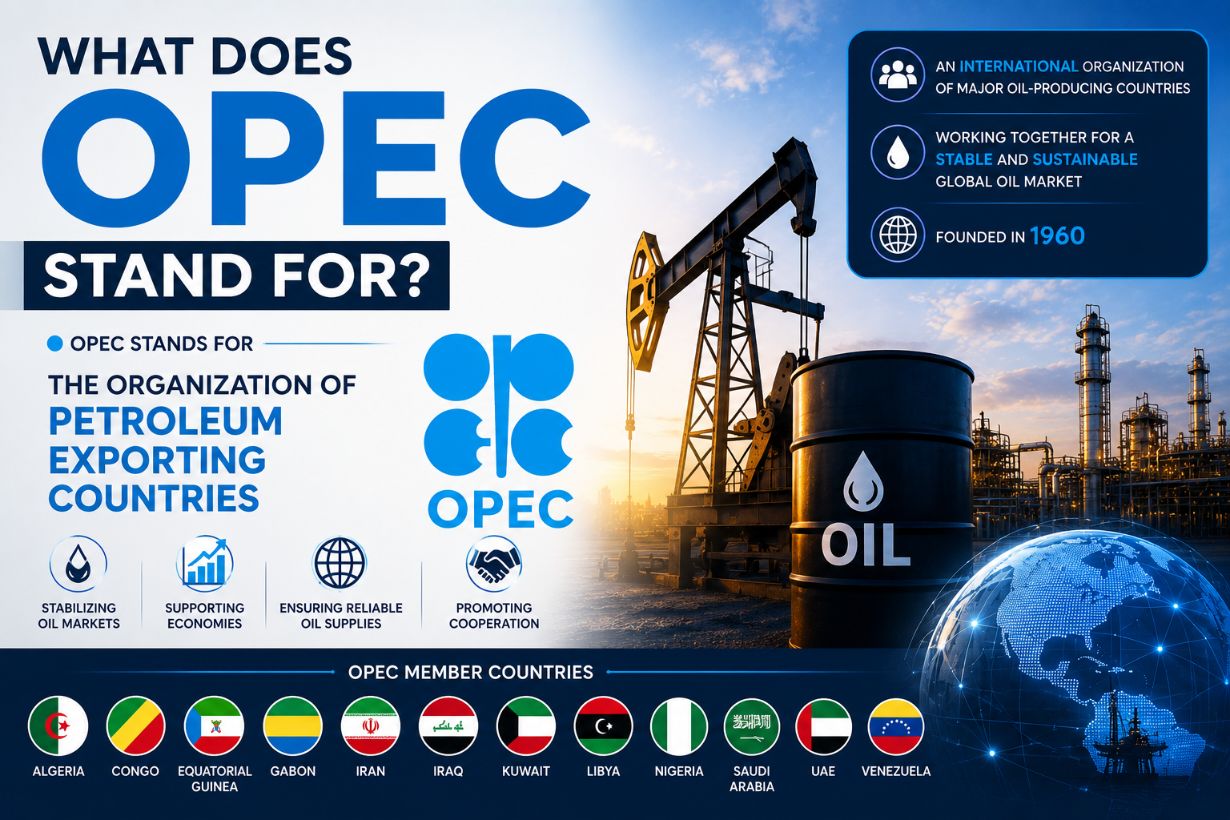
OPEC stands for the Organization of the Petroleum Exporting Countries.
It is an international organization made up of major oil-producing countries. OPEC was created to coordinate petroleum policies among its members and help promote stability in the global oil market.
The organization is frequently mentioned when crude oil prices move sharply, especially when major oil producers announce changes to their production plans.
But OPEC is about more than just oil prices. Its decisions can have wider effects on energy markets, transportation costs, inflation and economies around the world.
When Was OPEC Founded?
OPEC was established in September 1960 in Baghdad, Iraq.
The organization was originally founded by five countries:
- Iran
- Iraq
- Kuwait
- Saudi Arabia
- Venezuela
These countries wanted greater cooperation among oil-producing nations and a stronger voice in the international petroleum market.
OPEC later expanded as additional oil-producing countries joined the organization.
Why Was OPEC Created?
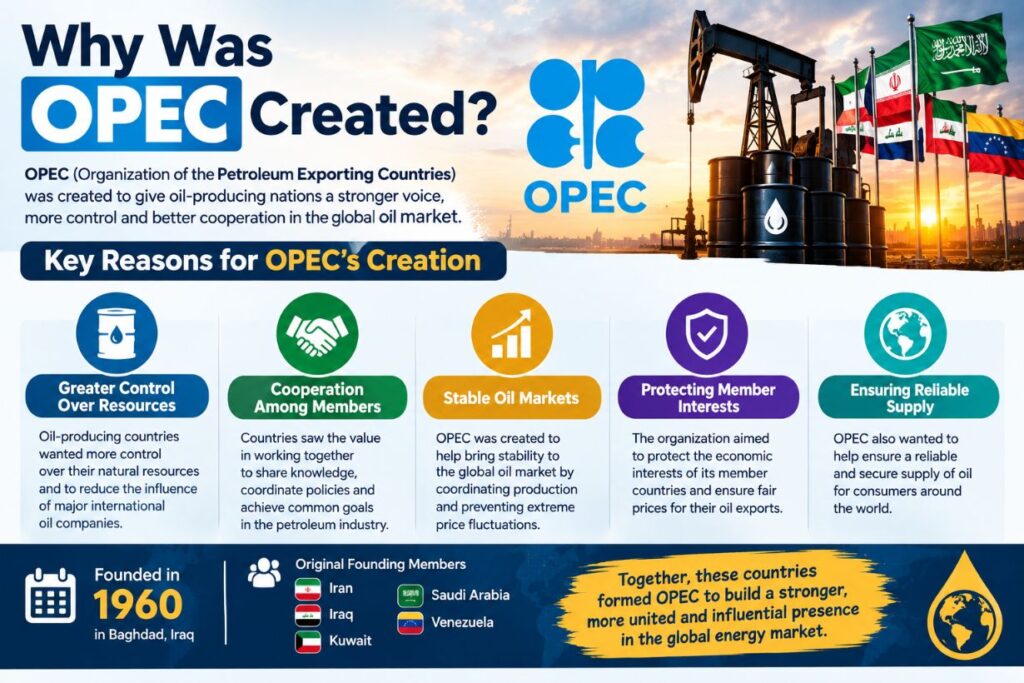
Before OPEC was established, major international oil companies had considerable influence over oil production and pricing.
Oil-producing countries wanted greater control over their petroleum resources and better cooperation on energy policies.
OPEC was therefore created with several broad objectives, including:
- Coordinating petroleum policies
- Protecting the interests of member countries
- Supporting stability in oil markets
- Ensuring reliable oil supplies for consumers
- Encouraging investment in the petroleum industry
The organization has evolved significantly since 1960, but cooperation among major oil-producing countries remains at its core.
Read Also Details Article: What Is OPEC and Why Is It Important? A Complete Beginner’s Guide
What Does OPEC Actually Do?
OPEC monitors developments in the global oil market and regularly discusses production, demand and supply conditions.
Its members meet to assess the market and decide on coordinated production policies when appropriate.
For example, if global oil demand is weakening, producers may consider reducing output to prevent an excessive supply surplus.
If the market is experiencing tight supply, production adjustments can move in the opposite direction.
However, it is important to understand that OPEC does not simply set the global price of oil.
Crude oil prices are influenced by many factors, including supply and demand, economic growth, geopolitical tensions, inventories, currency movements and unexpected disruptions to production.
How Does OPEC Affect Oil Prices?
OPEC’s influence comes largely from the amount of crude oil produced by its members.
When major producers reduce production, less oil may be available on the international market. If demand remains strong, tighter supply can put upward pressure on crude oil prices.
When production increases, additional supply can put downward pressure on prices if demand does not increase at the same pace.
This relationship can be summarized simply:
Lower supply + strong demand → potential upward pressure on prices
Higher supply + weak demand → potential downward pressure on prices
The actual market response can be more complicated because traders also consider future demand, inventories, geopolitical risks and expectations about OPEC’s next decisions.
What Is OPEC+?
OPEC+ is a wider cooperation group that includes OPEC members and several major oil-producing countries outside OPEC.
The arrangement became particularly important because countries outside OPEC, including Russia, also produce substantial amounts of crude oil.
By working together, participating countries can coordinate production policies across a larger portion of the global oil supply.
This is why news reports often mention OPEC+ meetings rather than OPEC alone when discussing production decisions.
Which Countries Are in OPEC?
OPEC’s membership has changed over the decades as countries have joined, left or rejoined the organization.
Important OPEC members include countries such as:
- Saudi Arabia
- Iran
- Iraq
- Kuwait
- United Arab Emirates
- Algeria
- Libya
- Nigeria
- Venezuela
OPEC membership should always be checked against the organization’s latest official information because the list can change over time.
Why Is Saudi Arabia Important Within OPEC?
Saudi Arabia is one of the world’s largest oil producers and has historically played a particularly influential role within OPEC.
Because of its large production capacity, Saudi Arabia can have a significant influence on discussions about the global oil market.
Its production decisions are therefore closely followed by energy companies, governments, traders and financial markets.
Why Does OPEC Matter to Ordinary People?
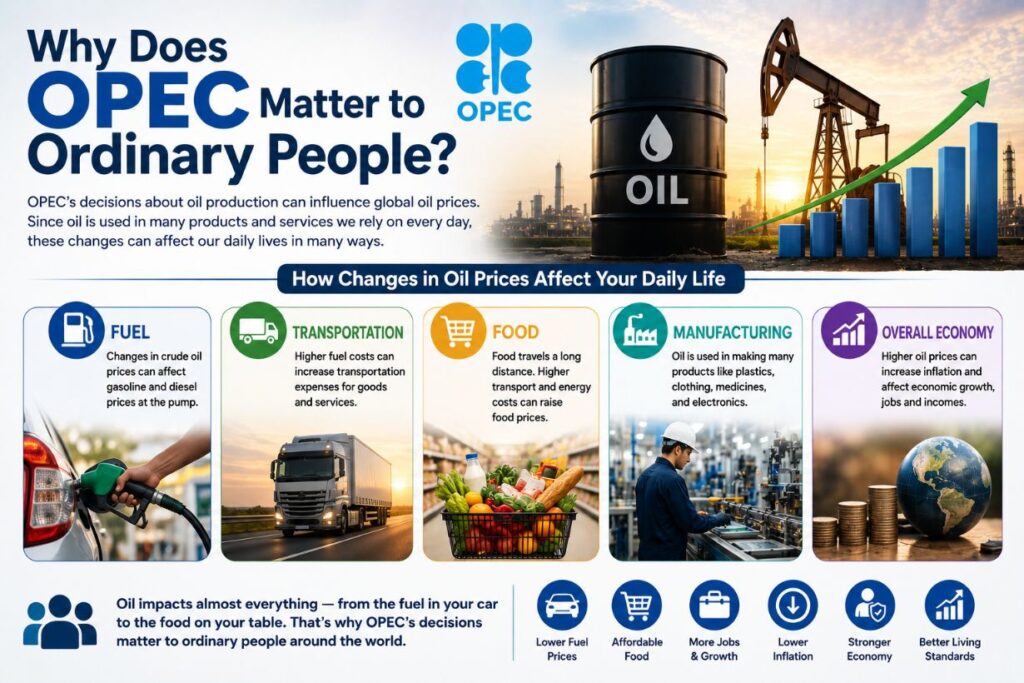
You might wonder why an international oil organization matters when you are simply filling your car with fuel or buying groceries.
The answer is that oil is deeply connected to modern economies.
Crude oil is used directly and indirectly across many industries.
Fuel
Changes in crude oil prices can eventually affect gasoline and diesel prices.
Transportation
Trucks, ships and aircraft consume large amounts of energy. Higher fuel costs can increase transportation expenses.
Food
Food moves through long supply chains before reaching consumers. Higher transportation and energy costs can contribute to higher food prices.
Manufacturing
Petroleum is also used in the production of various chemicals, plastics and industrial materials.
This means changes in oil prices can spread through the economy in ways that consumers may not immediately notice.
OPEC vs OPEC+: What’s the Difference?
The simplest way to understand the difference is:
| OPEC | OPEC+ |
|---|---|
| Organization of oil-exporting member countries | Wider cooperation group |
| Founded in 1960 | Developed later |
| Includes OPEC members | Includes OPEC plus participating non-OPEC producers |
| Focuses on coordinating member oil policies | Coordinates production among a broader group |
| Saudi Arabia is a key member | Includes major producers such as Russia |
OPEC and OPEC+ are closely connected, but they are not exactly the same organization.
What Challenges Does OPEC Face?
The global energy industry is changing.
OPEC faces several long-term challenges, including:
Renewable Energy
Solar, wind and other renewable energy technologies are expanding in many countries.
Electric Vehicles
The growth of electric vehicles could reduce oil demand from road transportation over time.
Climate Policies
Governments are introducing policies aimed at reducing greenhouse-gas emissions.
Changing Global Demand
Oil demand can change depending on economic growth, technology and consumer behavior.
Despite these challenges, oil remains an important part of the global energy system, meaning OPEC continues to have a significant role in international energy discussions.
Frequently Asked Questions About OPEC
What does OPEC stand for?
OPEC stands for the Organization of the Petroleum Exporting Countries.
What is the main purpose of OPEC?
Its main purpose is to coordinate petroleum policies among its member countries and promote stability in international oil markets.
When was OPEC founded?
OPEC was founded in 1960 by Iran, Iraq, Kuwait, Saudi Arabia and Venezuela.
Does OPEC set oil prices?
OPEC does not directly set a fixed global oil price. Its production decisions can influence global supply and therefore affect market prices.
What is OPEC+?
OPEC+ is a broader group consisting of OPEC members and participating oil-producing countries outside OPEC.
Why is OPEC important?
OPEC is important because its members are major oil producers, so their production policies can influence global energy markets and the wider economy.
Is Saudi Arabia part of OPEC?
Yes. Saudi Arabia is a founding member of OPEC and remains one of its most influential members.
Is Russia part of OPEC?
Russia is not an OPEC member, but it participates in the broader OPEC+ cooperation framework.
Conclusion
So, what does OPEC stand for? It stands for the Organization of the Petroleum Exporting Countries, an international organization established in 1960 by five oil-producing nations.
OPEC was created to give oil-producing countries greater cooperation and influence in the petroleum market. Today, its decisions are closely watched because changes in oil production can affect global supply, crude oil prices and economies around the world.
For consumers, the effects can eventually appear in fuel prices, transportation costs, food prices and other areas of everyday life.
And with the growth of renewable energy and electric vehicles, OPEC’s role is likely to continue evolving as the global energy system changes.


[…] Read Also: What Does OPEC Stand For? Meaning, Members and Why It Matters […]