

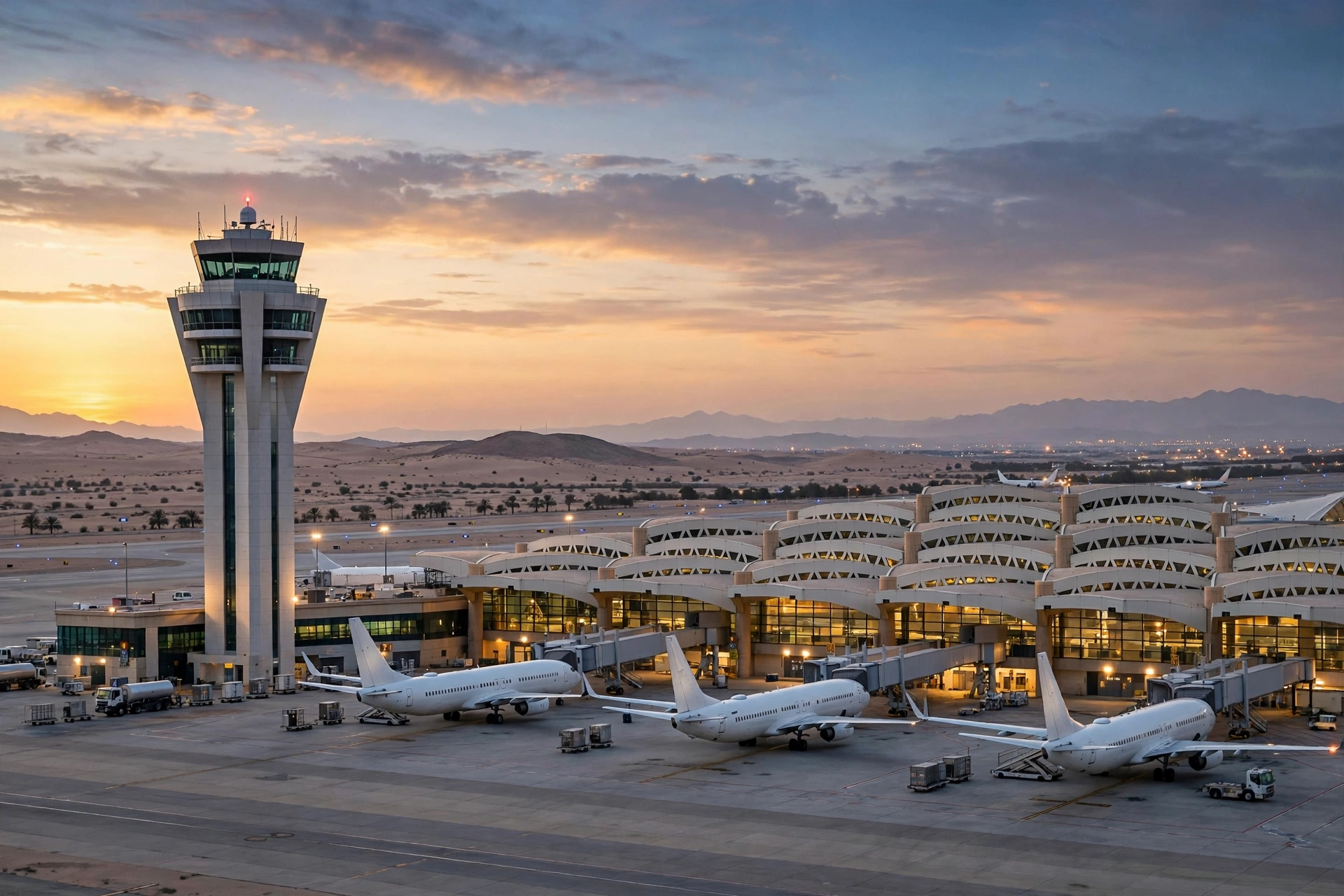
RIYADH, October 18, 2026 — King Khalid International Airport in Riyadh resumed operations on Sunday, more than a week after it was forced to close following a series of attacks by Yemen’s Houthi rebels, state and aviation officials confirmed.
The reopening marks the first return to service for the kingdom’s busiest international gateway since Saudi aviation authorities suspended operations to inspect infrastructure and confirm operational readiness. Travel trackers said a small number of domestic and regional movements were again being listed for the airport on Sunday afternoon.
Airlines Keep Suspensions in Place
Despite the restart, most international carriers have not yet restored full schedules to the Saudi capital and other cities in the kingdom, leaving thousands of passengers checking flight statuses hour by hour.
UAE carriers remain cautious. Etihad Airways cancelled all flights between Abu Dhabi and Riyadh through Monday, October 19, while services to Dammam and Jeddah face ongoing disruption, aviation updates reported. A limited number of Jeddah-bound services were scheduled to operate on Sunday.
Emirates has listed cancellations and schedule changes on services from Dubai to Riyadh, Jeddah and Dammam, though flight schedules show six Dubai–Riyadh services — EK815, EK817 and EK819 outbound, with EK816, EK818 and EK820 on the return — planned for October 20, a signal the carrier expects to resume.
Flydubai cancelled its flights to Riyadh, Dammam and Abha through October 19, while Air Arabia cut services from Sharjah to Riyadh, Dammam, Abha and Taif without naming a date for resumption. Qatar Airways temporarily suspended flights to and from Riyadh and Dammam, while Gulf Air said its services were operating as scheduled from Sunday.
Longer Suspensions Beyond the Region
The disruption reaches far beyond the Gulf. Air India and Air India Express extended their Saudi suspensions until October 24, while Indian budget carriers IndiGo and Akasa Air pushed cancellations through the same date, according to travel reporting.
European and Asian carriers are staying away longer still. Air France-KLM is expected to avoid Saudi Arabia until the end of October, Philippine Airlines has suspended services until November 29, and US carrier Delta postponed its planned Atlanta–Riyadh launch to March 2027, aviation analysts noted.
The scale of the disruption has been severe. More than 4,000 scheduled departures from Saudi airports were cancelled or failed to operate between October 8 and 15, and on October 15 nearly half of all scheduled services — 552 of 1,178 — were affected. Riyadh was the hardest hit, with 298 of 366 scheduled departures cancelled or not operating that day, representing 81.4 percent of traffic.
Attacks That Triggered the Closure
The closure followed a sustained campaign of missile and drone strikes on Saudi territory after fighting in Yemen reignited. Reports said attacks on King Khalid International Airport in early October killed at least a dozen people and forced authorities to suspend operations while safety inspections were completed.
Coalition spokesman Turki al-Malki said on Saturday that Saudi air defences intercepted four drones over Riyadh, the Eastern Province and the south of the country, and early Sunday reported the interception of two ballistic missiles headed toward Khamis Mushait.
Aviation officials said flight operations will expand gradually as security conditions allow, and urged passengers to confirm the latest status of their flights with their airline before travelling.