

JURF AL-SAKHAR, Iraq — Saturday, November 21, 2026 — Iraqi security forces entered the town of Jurf al-Sakhar on Friday, taking control of a stronghold held by the powerful Iran-backed Kataib Hezbollah militia for more than a decade, in a rare assertion of state authority that defused a standoff many feared could spiral into open fighting.
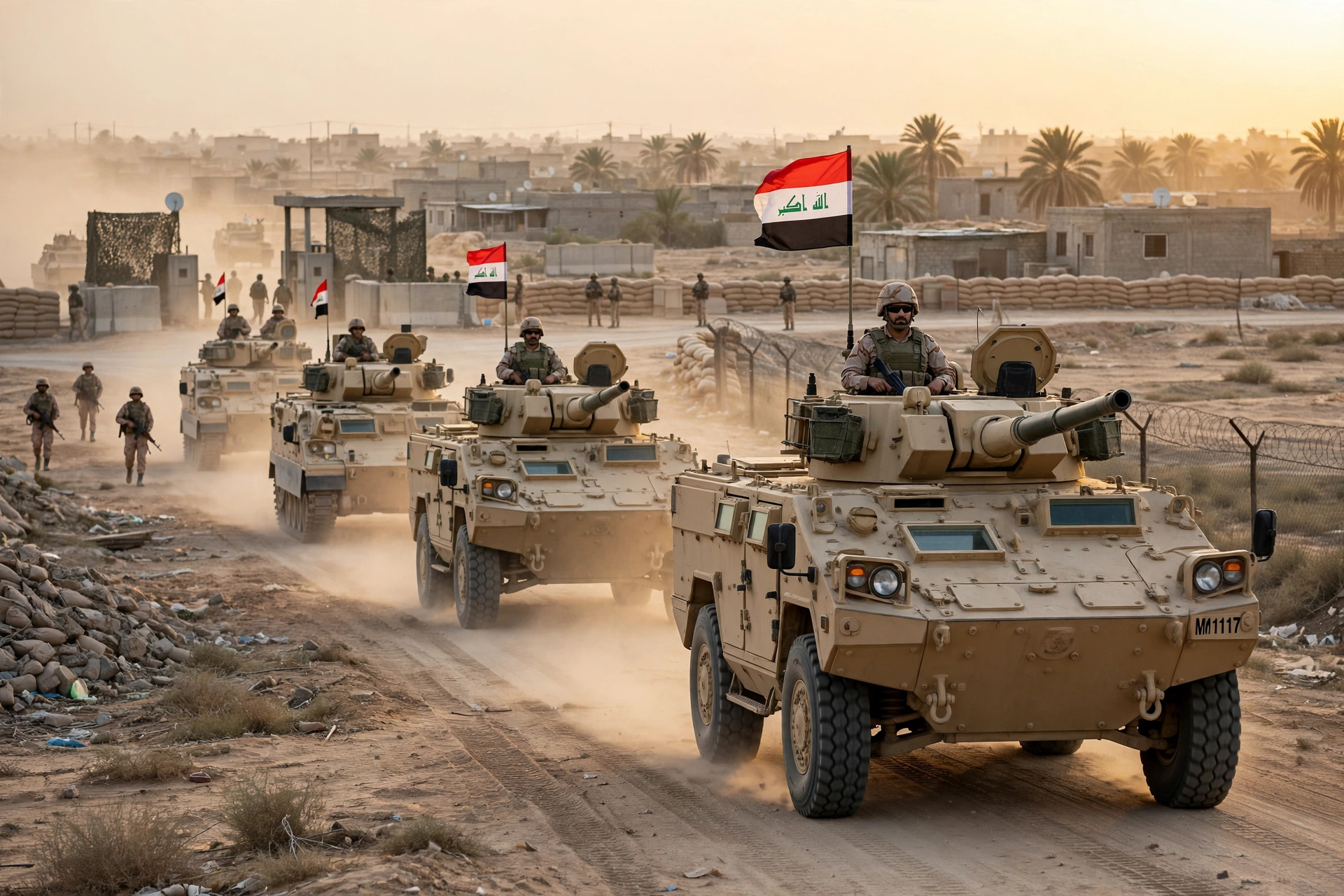
Convoys flying Iraqi flags rolled into the town in Babil province, about 60 kilometres southwest of Baghdad, and soldiers took up positions in the centre under a compromise deal sealed the day before, witnesses reported.
The town, also known as Jurf al-Nasr, has been effectively closed to outsiders for around 12 years, ever since Kataib Hezbollah helped recapture it from the Islamic State group in 2014 and stayed on. Tens of thousands of residents were displaced and have not been able to return.
A standoff that nearly turned to war
The deployment followed days of mounting tension. Prime Minister Ali al-Zaidi’s government had accused the militia of running an oil-smuggling network in the area, siphoning state-owned crude worth hundreds of millions of dollars, and had given the group until Friday to leave. Government forces massed outside the district as a senior militia commander vowed the group was going nowhere.
Under a deal reached after lengthy talks, Kataib Hezbollah agreed to let state forces in and withdraw within a month. An AFP correspondent reported seeing police pass through the first militia checkpoint, and officials said no violations were recorded.
Speaking to the troops by radio, the prime minister said government forces were “not waging war”. “Everyone present there are your brothers, the sons of this nation, and their blood is our blood,” he told them, while insisting that his decision to restrict weapons to state control was final.
Iran’s hand in the deal
The compromise bore the fingerprints of Tehran. Esmail Qaani, commander of Iran’s Islamic Revolutionary Guard Corps’ Quds Force, visited Iraq earlier in the week to help seal the agreement, according to regional media reports. The deal also showed the limits of the prime minister’s authority: he has already pushed back the deadline for disarming all Iran-aligned militias to at least June 2027.
Under the arrangement, an army brigade, a Federal Police battalion and an Energy Police regiment will guard oil pipelines in the area, alongside two Popular Mobilisation Forces brigades. A joint command headquarters opened in the town at 6 a.m. on Friday, the Iraqi News Agency reported. Nine senior security and oil officials have been dismissed following the investigation, while Kataib Hezbollah has denied the allegations.
What happens next
Support teams have begun work on the 70-kilometre road linking Jurf al-Nasr to the holy city of Karbala, ahead of its reopening to the public on Saturday, restoring a pilgrimage route and showing Baghdad intends to regain territory held by the militia for 12 years.
Analysts cautioned that the deal is a compromise, not a victory. The deployment is understood to have been driven by pressure from the United States and its Gulf allies, who have pressed Baghdad to reduce Iran’s influence. Whether the militia honours its pledge to leave within a month will be the first test of a deal that averted a confrontation but left the question of who holds the guns in Iraq unresolved.