


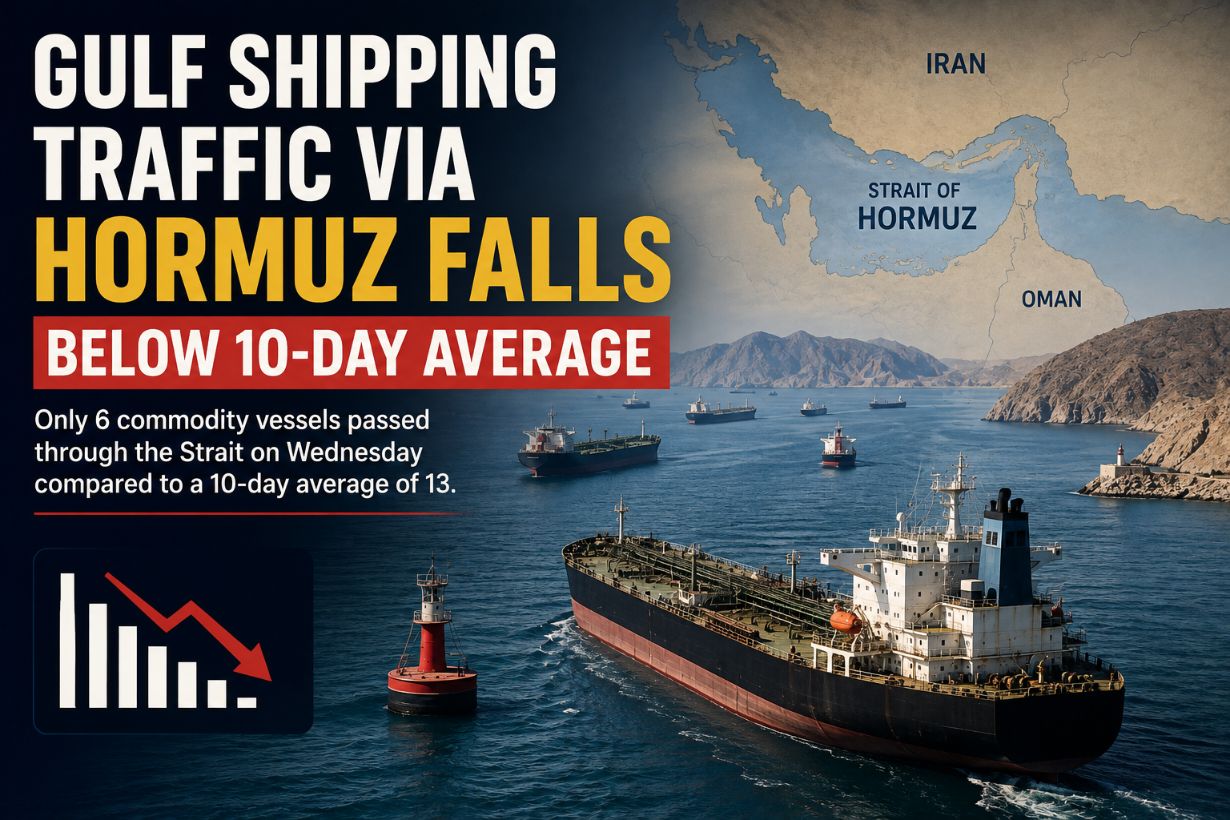
Shipping traffic through the Strait of Hormuz fell significantly on Wednesday, with only six commodity vessels recorded passing through the strategic waterway.
Preliminary data from ship-tracking company Kpler showed that the figure was down from 11 vessels the previous day and considerably below the recent 10-day average of around 13 vessels. The data was recorded at 0405 GMT on Thursday.
The latest decline highlights the continued impact of regional tensions on one of the world’s most important maritime routes.
What Ships Passed Through the Strait?
The six vessels recorded in the latest data included different types of commercial ships.
Among them were:
- Two very large gas carriers
- Two long-range tankers
- One Supramax tanker
- One Panamax tanker
Kpler noted that the figures could change because some vessels switch off their tracking transponders while travelling through the waterway.
This means the preliminary numbers may not represent the final total for the day.
Iran Adds More Restrictions on Shipping
The reduction in traffic comes as Iran has expanded a list of vessels it considers non-compliant with its requirements for passage through the Strait of Hormuz.
According to information cited by Reuters, ships on the restricted list could face fines, confiscation or detention if they attempt to pass through the waterway.
The list reportedly includes large crude-oil carriers, LNG and LPG tankers and vessels carrying clean petroleum products.
Saudi Arabia Reports Tanker Attack
The situation has also raised concerns about the safety of commercial shipping in the region.
Saudi Arabia said on Wednesday that an Iranian attack on an oil tanker owned by its national shipping company resulted in the deaths of two Filipino seafarers.
The incident adds to concerns among shipping companies and governments about the risks faced by vessels operating around the Gulf.
Bab el-Mandeb Traffic Moves in the Opposite Direction
While traffic through Hormuz declined, shipping activity through another major regional chokepoint, the Bab el-Mandeb Strait, increased.
Kpler data showed that 31 commodity vessels passed through Bab el-Mandeb on Wednesday. That was the highest daily figure recorded there since August 24 and was above its 10-day average of 25 vessels.
The previous day, only 17 vessels had crossed the waterway.
The contrasting figures show how shipping companies may be adjusting routes and operations as security conditions change across the region.
Why the Strait of Hormuz Matters
The Strait of Hormuz is a crucial route for global energy trade. Large quantities of oil, gas and petroleum products normally move through the waterway toward international markets.
A sustained reduction in commercial traffic could therefore have consequences for:
- Global oil supplies
- Natural gas shipments
- Shipping costs
- Marine insurance
- Energy prices
- International trade
For energy-importing countries, prolonged disruption could increase the cost of securing fuel and other energy products.
Shipping Companies Face Continued Uncertainty
The latest figures suggest that normal shipping activity has not yet returned to the Strait.
However, the situation remains fluid. Vessel tracking data can change as ships turn off their transponders, while diplomatic and security developments could also influence the number of commercial vessels willing or able to use the route.
For now, shipping companies continue to monitor the security situation closely as governments work to maintain the movement of commercial vessels through the region.
What Could Happen Next?
The future of shipping through the Strait of Hormuz will largely depend on regional security conditions and any developments between Iran and other countries involved in the conflict.
If traffic remains below normal levels for an extended period, pressure could increase on alternative routes, energy markets and global supply chains.
On the other hand, any improvement in security conditions could encourage more vessels to return to the waterway.
Frequently Asked Questions
How many vessels crossed the Strait of Hormuz?
Six commodity vessels were recorded crossing the Strait of Hormuz on Wednesday, according to preliminary Kpler data.
What is the normal recent average?
The 10-day average was around 13 commodity vessels per day, making Wednesday’s figure significantly lower.
Why can the shipping numbers change?
Some ships turn off their tracking transponders during voyages, so preliminary tracking data may not capture every vessel immediately.
Why is Hormuz important for global trade?
The Strait is a major energy shipping route connecting the Persian Gulf with the Gulf of Oman and wider international markets.
Is shipping also affected at Bab el-Mandeb?
Yes, but recent data showed stronger activity there, with 31 commodity vessels crossing on Wednesday compared with a 10-day average of 25.
Conclusion
Commercial shipping through the Strait of Hormuz remains well below its recent average, with only six commodity vessels recorded on Wednesday.
The decline comes amid continuing security concerns, new Iranian restrictions on some vessels and a reported attack involving a Saudi-owned tanker. Meanwhile, shipping activity through Bab el-Mandeb has increased.
With Hormuz remaining a critical route for global energy supplies, any prolonged reduction in traffic could have wider consequences for shipping, energy markets and international trade.