


RIYADH — September 29, 2026: Saudi Arabia has resumed crude oil loadings from its Red Sea port of Yanbu after restarting the East-West pipeline, which was shut down earlier this month following drone attacks the kingdom blamed on Iraqi militias, trade sources and shipping data showed on Tuesday.
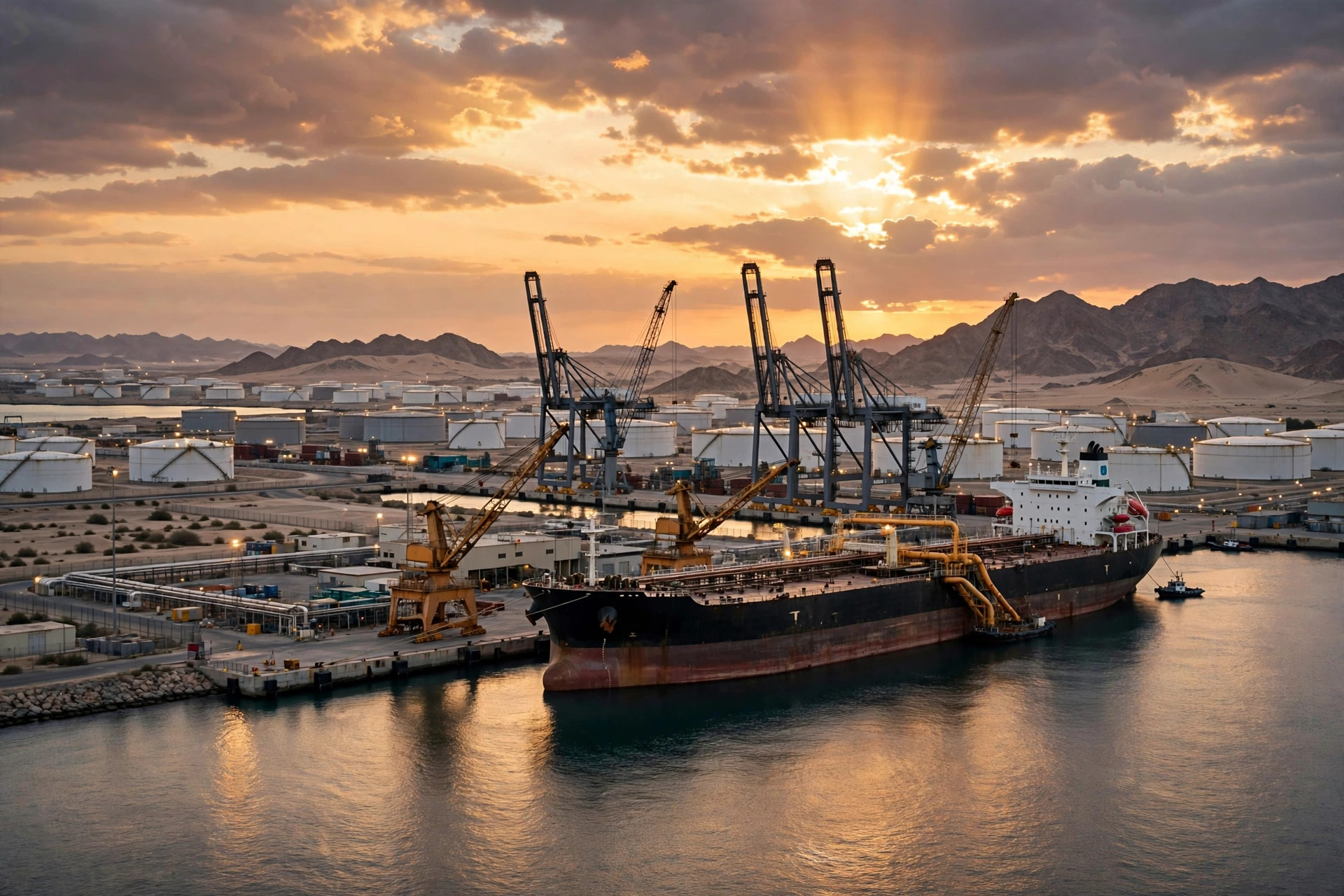
The pipeline — a critical artery carrying crude from the kingdom’s eastern oil fields to the Red Sea coast, bypassing the Strait of Hormuz — was shut on September 11 after the drone strikes. Operations resumed last Tuesday, and state oil giant Saudi Aramco notified customers on Monday evening of its October loading schedule from Yanbu, an Asian refining source said. A cargo was loaded from the port late last week.
Satellite Data Shows Rapid Ramp-Up
Satellite imagery and vessel-tracking data point to a rapid ramp-up of exports. Vessel-tracking firm TankerTrackers.com said imagery captured over the Red Sea on September 27 showed Saudi Arabia loading nearly 10 million barrels of crude oil at Yanbu and Al Muajjiz, a terminal south of Yanbu, with 40 tankers identified in the area.
Two trade sources separately estimated crude loadings from Yanbu at about 2 million barrels per day since last week. Ship-tracking firm Kpler estimated current pipeline throughput at around 2.65 million barrels per day and expects it to climb to between 3 million and 4 million barrels per day in the coming days. A full return to the pre-attack rate of roughly 5.5 million barrels per day could still take another month, Kpler said in a note on Monday.
Relief for Global Oil Markets
The resumption comes as Middle East crude flows face mounting pressure. The US war with Iran has throttled shipments through the Strait of Hormuz — the conduit for one-fifth of the world’s oil supply before the conflict — making the East-West pipeline’s return a significant relief for Asian buyers dependent on Saudi crude.
Diplomacy and Escalation in Yemen
The pipeline restart coincided with high-level talks in Washington, where US Secretary of State Marco Rubio met Saudi Foreign Minister Prince Faisal bin Farhan Al Saud on Monday. Riyadh is seeking US backing for its military campaign against the Houthis, who launched a sweeping offensive this month to seize Yemen’s Red Sea coast from Saudi-backed government forces.
On Saturday, Saudi military spokesperson Maj. Gen. Turki al-Malki said Saudi air defenses intercepted two drones and two ballistic missiles fired from Yemen. The Houthis have also attacked Saudi shipping and energy infrastructure, including Aramco facilities in the port city of Yanbu.
In a further sign of Gulf coordination, Saudi Defence Minister Prince Khalid bin Salman invited UAE Vice President Sheikh Mansour bin Zayed Al Nahyan to visit the kingdom on Tuesday — the first public invitation for a face-to-face meeting since a rift between the two countries over Yemen.
Aramco did not immediately respond to a request for comment.