


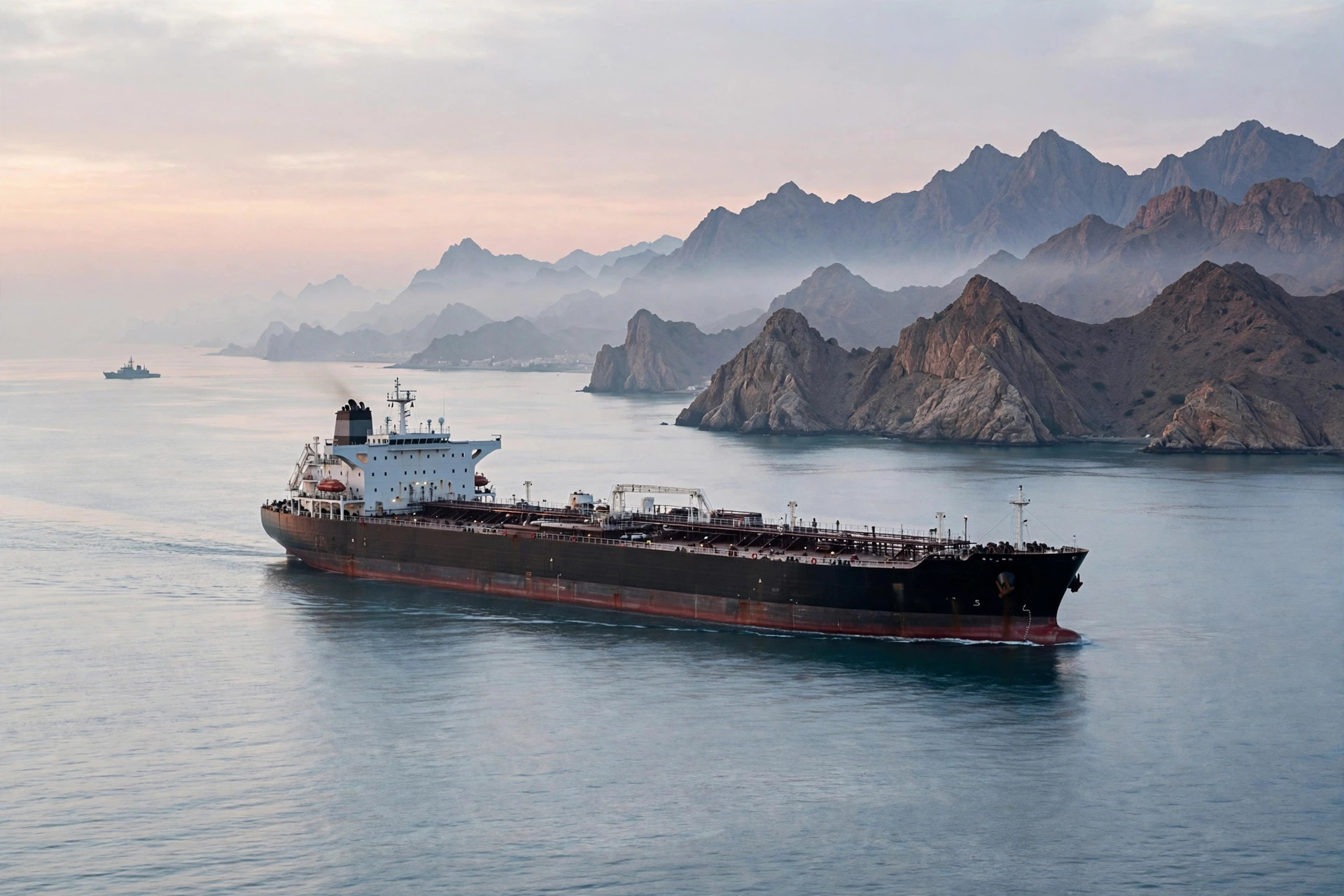
STRAIT OF HORMUZ — October 19, 2026. An oil tanker caught fire early Monday after striking a naval mine south of the Strait of Hormuz, Iran’s Islamic Revolutionary Guard Corps said, in the latest explosion to rock the world’s most important oil shipping lane as Tehran tightens its grip on the strategic waterway.
The blast tore into the vessel’s engine room as it attempted to leave the strait, the semi-official Fars News Agency reported, citing an IRGC Navy statement issued in the early hours of Monday. The Guard said the tanker had switched off all of its positioning and navigation systems at the start of its voyage and was attempting to pass through what Tehran considers an unauthorised southern route.
The vessel was not identified in the statement, and no information was given about casualties or the extent of the damage, according to state media reports.
Third mine strike in three days
The incident follows a rapid series of similar explosions. A day earlier, the IRGC Navy said two oil tankers caught fire in the strait after striking mines, according to multiple media reports. On Saturday, the force said a second supertanker carrying more than two million barrels of crude oil had struck a naval mine and caught fire while attempting to cross the strait via an unauthorised route. A day before that, Iranian state media reported that another tanker had hit a mine, triggering an explosion and fire.
The Guards’ naval commander, Admiral Ali Ozmaei, warned this week that any vessel which deactivated its navigation systems would be considered “hostile,” state media reported.
‘Unauthorised route’ warning
The IRGC Navy accused the latest vessel of violating maritime regulations governing passage through the strait. The statement warned that ships operating in the Strait of Hormuz and the wider Gulf with their navigation and identification systems switched off would face a firm response, according to reports from Iranian state media.
Iran has demanded that all ships seek its authorisation before transiting the waterway, a position it has maintained since it seized control of the strait after war broke out between Iran and the United States and Israel in late February, disrupting a route that normally carries about a fifth of the world’s oil.
Oil and shipping stakes
The latest explosion adds to mounting pressure on energy markets and global shipping. Tehran has kept the strait effectively closed since July, when Iran declared it shut to all traffic, state media reported, while Washington has imposed a naval counter-blockade on Iranian oil exports in response to Tehran’s blockade of the waterway.
A US–Iran memorandum of understanding signed in June concerning freedom of navigation in the strait has stalled over disagreements related to security in the strategic waterway, according to media reports.
The tanker incident comes amid fresh diplomatic movement: Iran says it has sent Washington a seven-day plan via Qatar to reopen the strait, and the US president has predicted a quick end to the Iran war. Shipping sources said tanker operators were reassessing routes through the Gulf as the mine threat shows no sign of abating.

[…] October 17, 2026 — Iran’s Islamic Revolutionary Guard Corps Navy said on Saturday that a second oil supertanker carrying more than two million barrels of crude oil exploded and burst int… after striking a naval mine in the Strait of Hormuz, marking a dangerous new escalation in the […]