

TEHRAN — October 22, 2026 — Iran’s Islamic Revolutionary Guard Corps (IRGC) has vowed to “invade” any country that attacks Iran, declaring that Tehran’s defence doctrine is shifting from a purely defensive posture to an “offensive and asymmetrical” one as tensions with the United States and Israel mount across the Middle East.
A doctrinal turning point
In remarks to Iran’s Student News Network on Wednesday, IRGC spokesman Hossein Mohebi said the force would no longer limit itself to responding to aggression. “Previously, Iran’s defence doctrine was strictly defensive, and our position was that any country attacking us would face a response,” he said. “Now, we say if a country attacks us, we will respond to it, and we will invade.”
Mohebi said Iran would move towards a doctrine based on permanent deterrence and asymmetric warfare. “We will attack the enemy in such a way that it will understand the intensity of our action,” he said, adding that the objective was to establish what he described as permanent and absolute deterrence against military threats.
The warning came alongside a separate declaration of readiness from Tehran’s security establishment. A senior Iranian security official told Press TV, the state broadcaster’s English-language network, that the country was prepared for a “full-scale, multi-layered and comprehensive war” and would respond to any aggression, killings or assassinations “without restrictions or reservations.” The official said Iran’s armed forces were fully prepared to target the interests and assets of potential aggressors and their regional supporters within reach.
Missiles, midterms and Hormuz
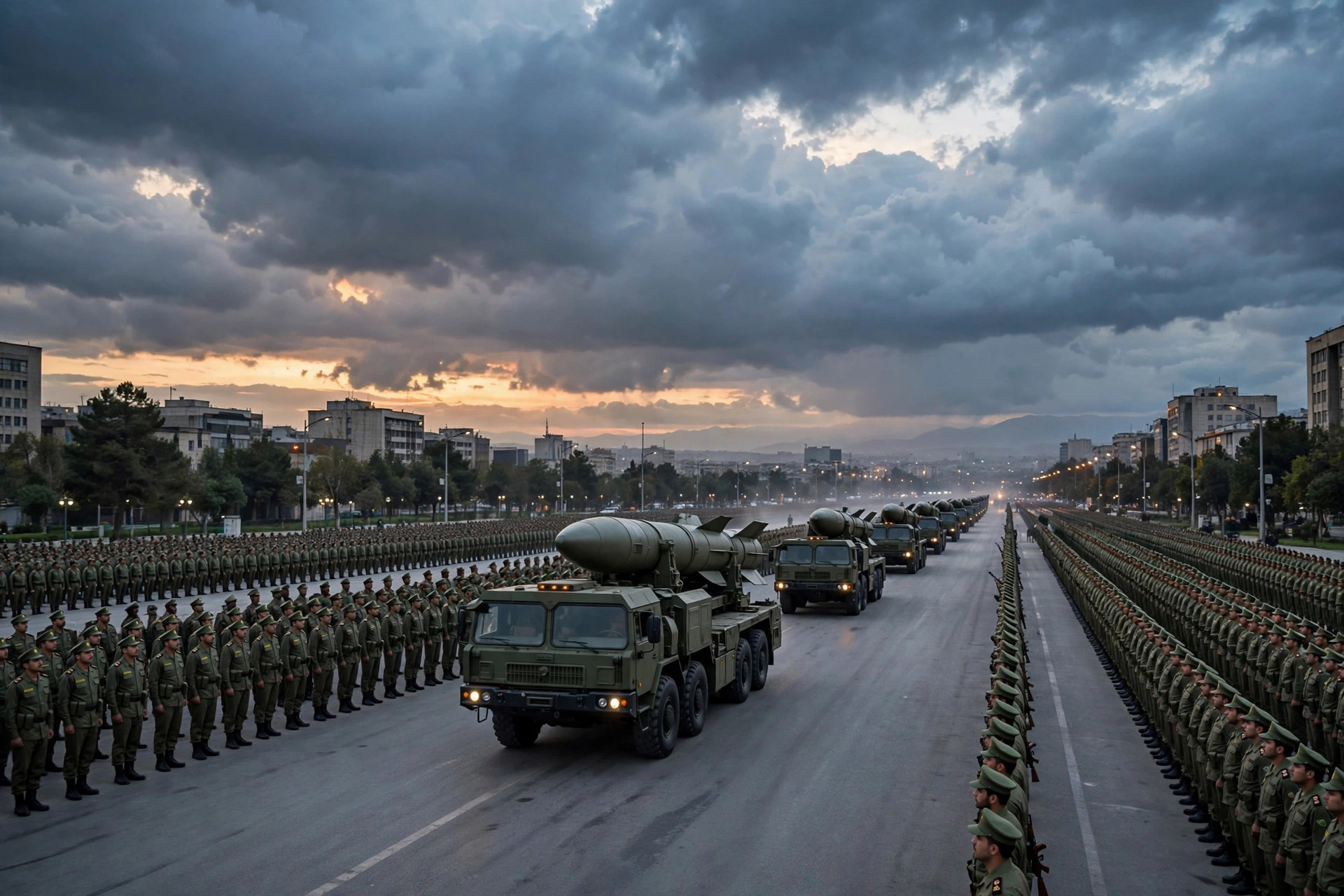
Mohebi claimed Iran’s missile stockpile had grown by half since the 12-day war with Israel in June 2025, without giving specific figures, and said the missiles’ quality, range, destructive power and accuracy had improved significantly. Iranian media also reported the spokesman saying Tehran was preparing to unveil a weapon he described as the “Father of All Bombs,” offering no technical details.
The IRGC spokesman taunted the United States over the strategic Strait of Hormuz, through which a fifth of the world’s oil supplies flowed in peacetime. “The Strait of Hormuz has squeezed the economic and political throat of the United States,” he said, warning that the economic and political consequences of the confrontation could damage President Donald Trump’s Republican Party in the upcoming midterm elections.
The remarks came as the war between the United States and Iran, which began in late February, entered another tense phase. US media reports said dozens of Israeli fighter jets had flown a training exercise along Iran’s western borders intended to demonstrate strength, while Israeli Prime Minister Benjamin Netanyahu accused Tehran of not having learned its lesson from the conflict and claimed Israel had completed “90 percent of the job” against Iran and its allies.
Diplomacy on the brink
Iran’s Foreign Minister Abbas Araghchi struck a contrasting note, saying Iran remained “firmly committed to seeking a dignified peaceful resolution to the conflict” while being “fully prepared to defend ourselves.” He accused Netanyahu of pushing Washington towards another war.
Talks over Iran’s nuclear programme remained deadlocked, with Iranian security chief Mohsen Rezaei insisting that “even a particle of enriched uranium will not exit Iran at all.” The US has demanded long-term, verifiable guarantees that Iran will not rebuild nuclear weapons capabilities — a demand Tehran calls a violation of its rights under the Non-Proliferation Treaty.
With the ordered departure of US embassy staff and families from Saudi Arabia announced on the same day, the IRGC’s doctrine shift marks one of the sharpest escalatory signals of the conflict so far — and a warning Gulf states will be watching closely.