

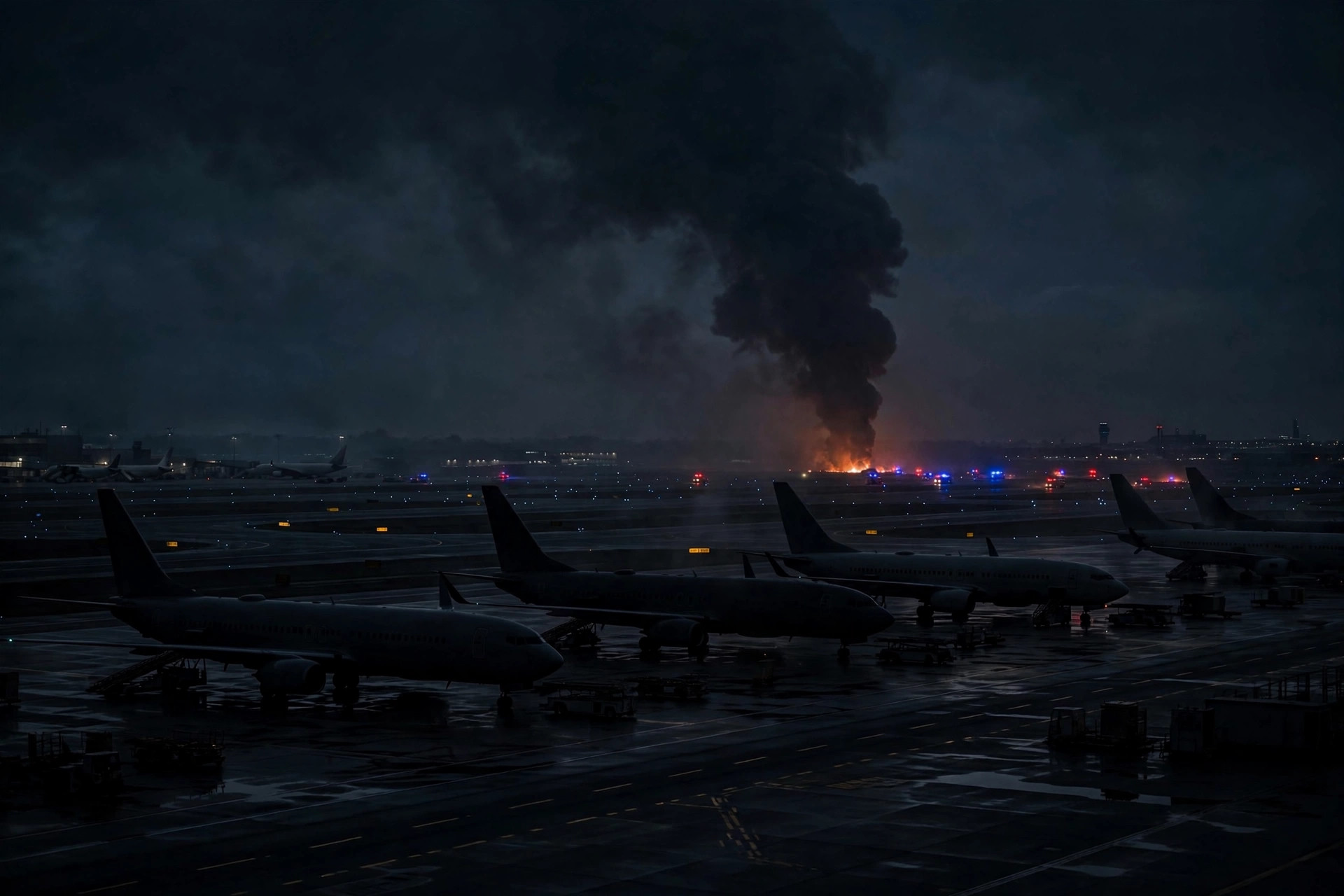
DAMMAM, Saudi Arabia — Monday, October 12, 2026 — A projectile struck the tarmac of King Fahd International Airport in Dammam on Sunday evening, igniting a fire beside parked aircraft and forcing a taxiing plane to abandon its departure, Saudi aviation authorities confirmed, marking the first known direct hit on the kingdom’s third-largest airport in the week-long campaign of strikes.
An eyewitness aboard the taxiing aircraft told Reuters that at around 8:30 p.m. local time on Sunday, a projectile impacted the tarmac near several parked planes and burst into flames. The aircraft turned back to the gate, passengers disembarked, and they were instructed to leave the terminal area, the witness said.
The Saudi civil aviation authority confirmed the strike late on Sunday, saying “damage assessments and safety inspections of airport facilities are under way.” Flight-tracking website Flightradar24 showed a wave of delays and cancellations for arrivals and departures at Dammam on Sunday, with several inbound flights held or diverted.
Houthis claim the attack
Yemen’s Houthi movement claimed responsibility for the Dammam strike. In a televised address on Sunday, Houthi military spokesman Yahya Saree said the group had hit the airport in Dammam in Saudi Arabia’s Eastern Province, along with two facilities of oil giant Saudi Aramco. The Saudi government’s media office and Aramco did not respond to requests for comment, trade sources said.
Saree’s claim came hours after the Houthis renewed their warning to airlines against using Saudi airports. “We urge everyone to take our warnings seriously, and Saudi Arabia bears responsibility for any failed interceptions,” the group said in a statement carried by state media.
Aviation fallout widens
The Dammam hit extends the air-travel disruption well beyond Riyadh, where Sunday’s strike on Terminal 4 of King Khalid International Airport killed one Pakistani resident and injured 11 people, according to Saudi authorities. It was the second attack on Riyadh’s airport in 24 hours and the fourth this week.
Gulf carriers moved quickly to adjust schedules. Etihad Airways listed cancellations on selected services linking Abu Dhabi with Riyadh, Jeddah and Dammam through Tuesday, October 13. Emirates cancelled selected Dubai services to Riyadh, Jeddah and Dammam on Sunday and Monday, according to schedules published on the airline’s website, while flydubai extended cancellations affecting its Riyadh routes until October 14. Lufthansa Group suspended Riyadh services through October 16, and several airlines operating from India cancelled flights as well, state media reported.
The United States Federal Aviation Administration issued a safety advisory urging American operators to exercise caution when flying to or over Saudi Arabia, citing military activity and possible interference with navigation systems. The advisory remains effective until December 10.
With flights cancelled from the UAE to several Saudi cities, Saudi Arabia’s consulate in Dubai and the Northern Emirates arranged buses to transport Saudi citizens overland after they were left unable to return home, Gulf News reported, prompting an outpouring of Emirati offers of accommodation and transport on social media.
Escalation on both sides
The strikes on Saudi airports come as the kingdom has stepped up its military involvement in Yemen, launching strikes against the Houthis and backing a government counteroffensive after the Houthis seized strategic territory along the Red Sea coast last month. The Houthis said Saudi Arabia carried out 124 air strikes in Yemen in the past 24 hours.
“Unless the Saudi enemy stops its aggression and interference in Yemen, worse is yet to come,” the Houthi-run foreign ministry said in statements carried by Al Masirah television, as Saudi-led coalition forces separately reported intercepting a cruise missile near King Khalid International Airport, a drone over the Eastern Province, and a ballistic missile fired towards Khamis Mushait.