

DUBAI, Tuesday, November 17, 2026 — Iran’s navy said a fourth oil tanker caught fire after striking a naval mine east of the Strait of Hormuz within 24 hours, as British maritime authorities separately confirmed an attack on a liquefied gas carrier off the coast of Oman, state media and shipping monitors reported.
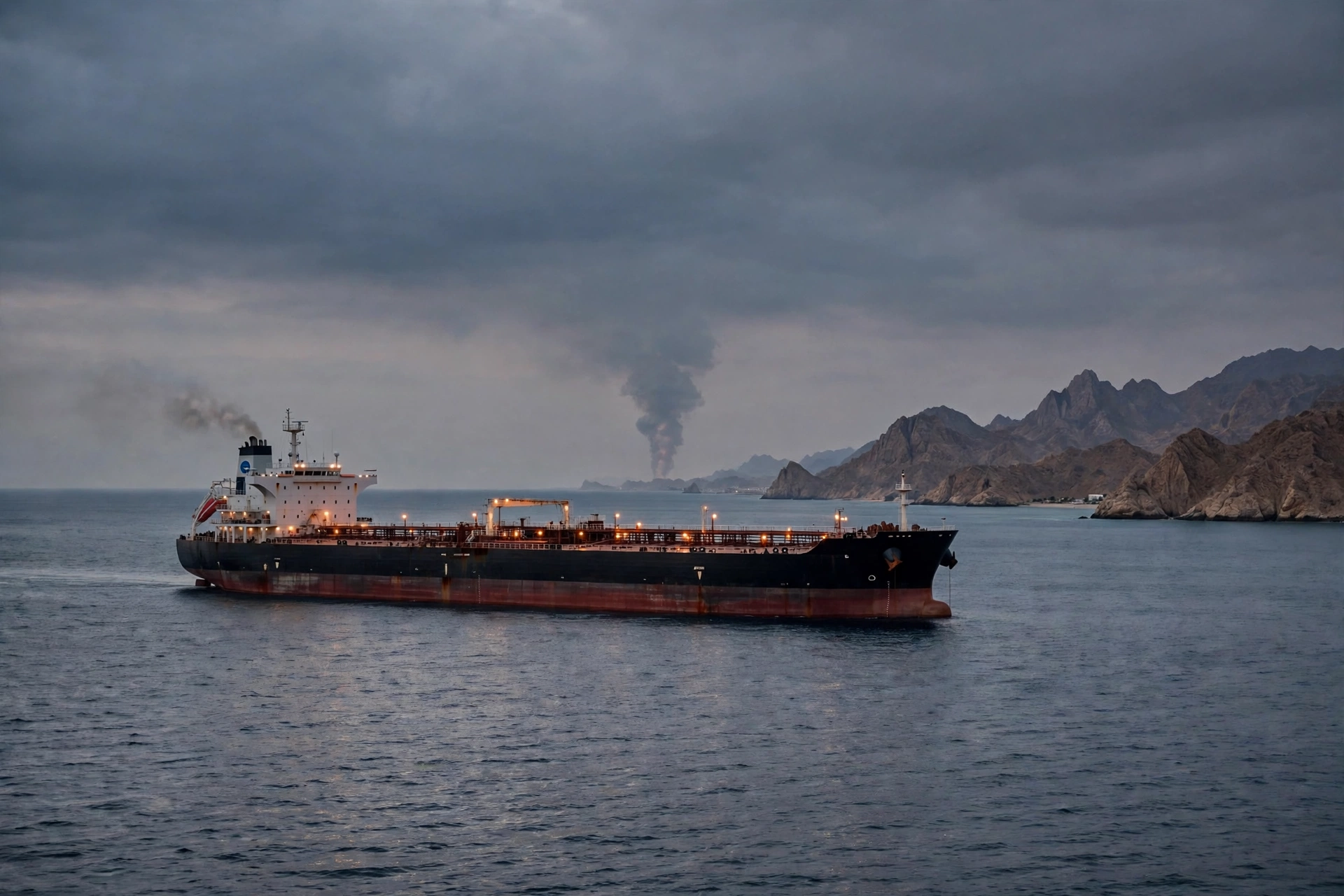
The Iranian Navy said the unnamed tanker had been travelling through a restricted area east of the strait with its navigation systems switched off, according to a statement carried by state broadcaster IRIB late on Monday. The vessel caught fire and sustained significant damage, the navy said, warning shipping operators against entering restricted waters without coordinating with its armed forces. No name, flag, cargo or crew details were given, and the claim could not be independently verified.
Fourth vessel in 24 hours
The announcement followed claims by Iranian naval forces that three tankers had exploded and caught fire after striking naval mines in and around the strait on Saturday. If confirmed, it would be the sharpest single-day escalation yet against shipping in the world’s most important oil waterway.
Iran tightened restrictions on shipping through the strait after US and Israeli strikes on Iranian territory in February, barring safe passage for vessels linked to the two countries.
Tara Gas crew safe
Separately, the United Kingdom Maritime Trade Operations agency reported an attack on Monday about seven nautical miles north of Khasab in Oman, involving a tanker left disabled with an engine-room fire. The vessel was later identified as the Panama-flagged LPG carrier Tara Gas, carrying 24 Indian seafarers.
India’s shipping minister, Sarbananda Sonowal, said on Tuesday that all 25 crew members aboard were safe and that authorities were closely monitoring the situation. Gulf News characterised the strike on the Tara Gas as a missile attack.
The incidents underline how exposed shipping remains in the narrow waterway, through which roughly a fifth of the world’s seaborne oil passes. Insurers have raised war-risk premiums for Gulf transits, and several operators have rerouted vessels or delayed sailings.
The verification gap
Important questions remain over what actually struck the vessels. Neither UKMTO advisory used the word “mine” — the first described a projectile strike and the second an attack — and the Joint Maritime Information Center has not confirmed a mine detonation in the latest incidents.
US Central Command has previously denied that any ships hit mines in the strait, and no independent maritime authority has verified the Iranian navy’s account. The gap between Tehran’s claims and the official advisories leaves the full picture unclear, even as near-daily attacks on commercial vessels continue.
A chokepoint under strain
The incidents come as the Gulf’s energy lifelines face pressure on two fronts: Saudi Arabia reported a fresh attack on its East-West oil pipeline on Monday, the route carrying about four million barrels of crude a day to Yanbu, bypassing the strait.
With the pipeline itself under repeated attack and the strait now the scene of four reported tanker incidents in a single day, traders and Gulf governments are watching for any further disruption to oil flows. For now, shipping continues through the strait — but every new incident adds to the sense that the world’s key oil artery is operating on borrowed time.
Sources: The Statesman, Economic Times, Times Now, Oman Observer, WION.