


CAIRO, Monday, 26 October 2026 — Egypt’s parliament voted on Monday to authorise President Abdel Fattah al-Sisi to send military support to Saudi Arabia to defend the kingdom against Houthi attacks, a decision that could draw the Arab world’s most populous state directly into the defence of its Gulf ally.
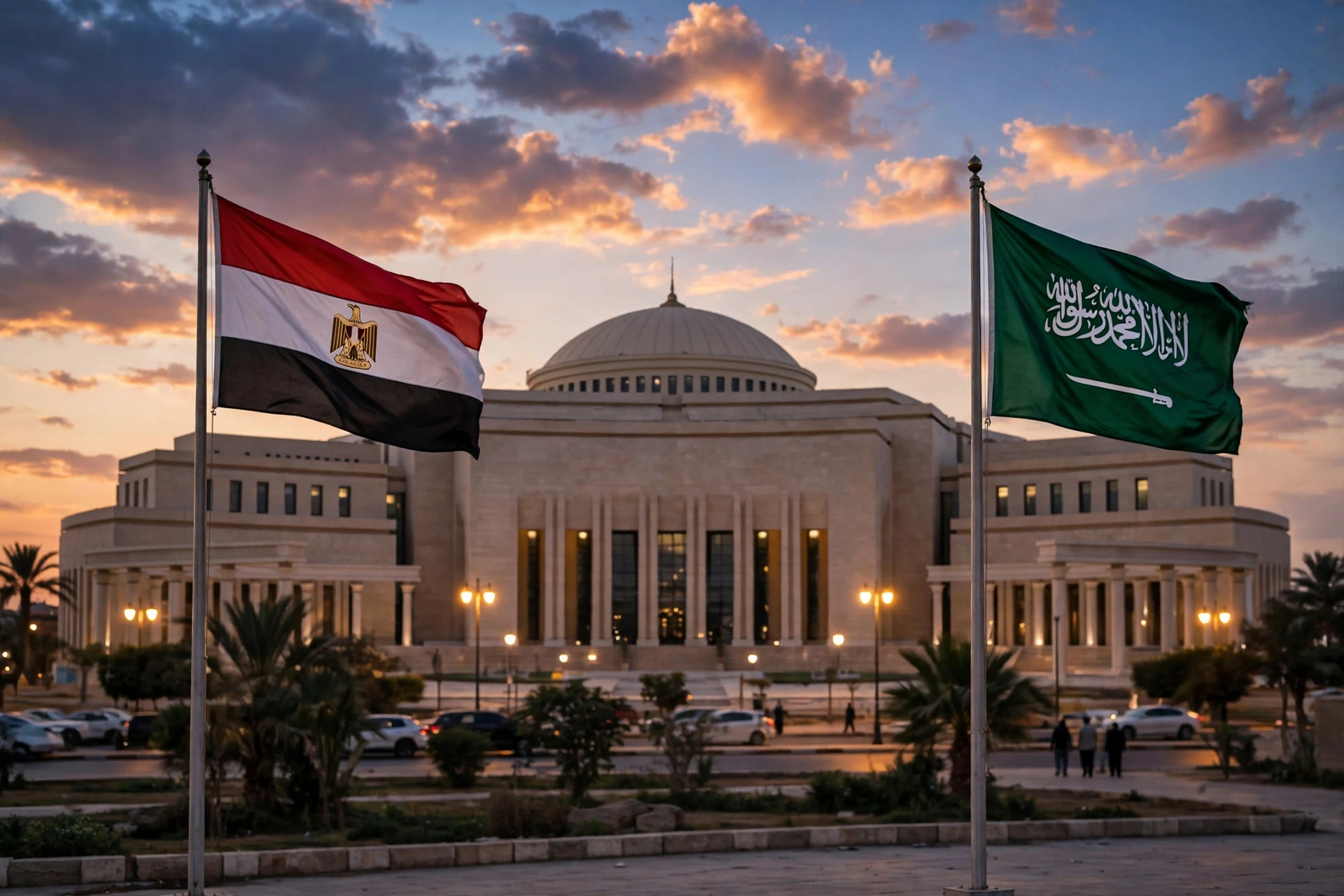
The House of Representatives approved authorising the president “to take the necessary measures to support the Kingdom of Saudi Arabia”, state newspaper Al-Ahram reported, following a request Mr al-Sisi made last week. The vote came after three rare secret sessions of parliament and two postponements, and followed an October 18 decision by the National Defence Council, chaired by the president, to back the security and territorial integrity of Saudi Arabia.
A defensive mandate, not an attack on Yemen
Mr al-Sisi has repeatedly stressed that any Egyptian role would be strictly defensive. Speaking last Wednesday, he said the support would be to “defend Saudi territory and does not include an attack on Yemen”, adding: “We are talking about defending the land and borders of the kingdom.” He has said the top priority remains a diplomatic solution.
Under Article 152 of Egypt’s constitution, the president must consult the National Defence Council and secure the approval of two-thirds of lawmakers before declaring war or sending armed forces on a combat mission abroad. The constitutional bar underlines how seriously Cairo treats the step, even though officials have not yet said what form the support would take or when it might be deployed.
Parliamentarians and local media reported the approval on Monday, and trade and diplomatic sources said the mandate applies only if Riyadh requests help. It was not immediately clear what defensive support Egypt, which boasts one of the region’s largest militaries, with hundreds of thousands of active personnel, fighter jets and complex air defences, might provide.
Why Cairo is moving now
The vote comes as Houthi attacks on Saudi Arabia have intensified in recent weeks, with the Iran-allied group targeting airports, ports and oil facilities across the kingdom. The escalation has become a volatile front in the wider United States-Israeli war on Iran, and the Houthis’ advances also threaten the Bab el-Mandeb Strait, the gateway to Egypt’s Suez Canal, through which a large share of world trade passes.
Egypt has frequently condemned Iranian and Iranian-backed attacks on Gulf countries, but it has not publicly engaged in direct combat in the current conflict and has not joined the Mecca mutual defence pact between Saudi Arabia, Pakistan and Turkiye signed in August. Foreign Minister Badr Abdelatty said this month that Egyptian membership of the pact remains “under serious consideration”, and he said on Monday he was “talking daily with the Iranians” to push for regional de-escalation.
A history Cairo has been wary of repeating
Egypt’s caution reflects its own history. Cairo joined the Saudi-led coalition in an earlier phase of Yemen’s war in March 2015, mainly as a naval partner, sending warships to secure Red Sea shipping lanes while pledging air support, and it deployed around 800 ground troops but played only a limited combat role.
Egypt was also involved in a costly military intervention in Yemen in the 1960s and has not undertaken a large-scale foreign ground deployment since the 1991 Gulf War. That record, diplomats said, explains why Mr al-Sisi has framed the new mandate in defensive terms and why some lawmakers had pressed for more detail on objectives, duration, cost and risks before the vote.
Saudi Arabia is a major political and financial partner of Cairo, providing billions of dollars in aid, deposits at the central bank and energy supplies under Mr al-Sisi. The vote, analysts said, signals that Cairo now regards the defence of its Gulf ally as inseparable from its own security, even as it keeps the door open to diplomacy with Tehran.