

JERUSALEM, Wednesday, October 28, 2026 — Prime Minister Benjamin Netanyahu’s bloc has taken the lead in Israel’s general election count but remains short of the majority needed to govern, partial results showed on Wednesday, setting up days of coalition bargaining in which Arab parties could hold the decisive seats.
With roughly three-quarters of ballot boxes counted, figures published by Israel’s Central Elections Committee put Netanyahu’s Likud-led bloc at 54 seats in the 120-seat Knesset. The opposition bloc led by former military chief Gadi Eisenkot stood at 47 to 49 seats, while Arab-led parties were projected at 16 to 19 seats. A party or bloc needs 61 seats to command a majority.
The figures are partial and will change as counting continues, with votes cast in so-called double envelopes — including those of soldiers, medical staff and diplomats abroad — still to be tallied. Final results were expected on Thursday or Friday.
No clear path to power
Exit polls released on Tuesday night had pointed to a dead heat, with the major television networks projecting the two camps almost evenly matched and neither close to 61 seats. Kan 11 and Channel 13 projected a 51-51 tie, while Channel 12 gave Netanyahu’s bloc a narrow 52-49 edge, reports said.
As counting progressed on Wednesday, Netanyahu’s camp edged ahead, but not by enough to govern alone. Likud remained the single largest party, projected at 24 to 27 seats, ahead of Eisenkot’s Yashar party at 21 to 23 seats.
Both leaders claimed on Tuesday night that they could form the next government. Eisenkot told supporters in Tel Aviv that voters had delivered a vote of no confidence in Netanyahu and urged him to retire from politics. Netanyahu, meanwhile, called for a strong right-wing government and pointed to the prospect of renewed military action against Iran alongside the United States, reports said.
Arab parties hold the balance
The strongest gains of the night came from Arab Israeli parties, whose voters turned out in soaring numbers. The Joint List and Ra’am together were projected at 16 to 19 seats, a showing that could make them kingmakers if either main bloc seeks their support.
That arithmetic is politically fraught. Opposition figures have largely dismissed a formal partnership with Arab parties, with the exception of the Democrats’ leader Yair Golan, reports said, while Netanyahu has repeatedly warned that Arab parties would dilute the nationalist direction in which he has taken Israel.
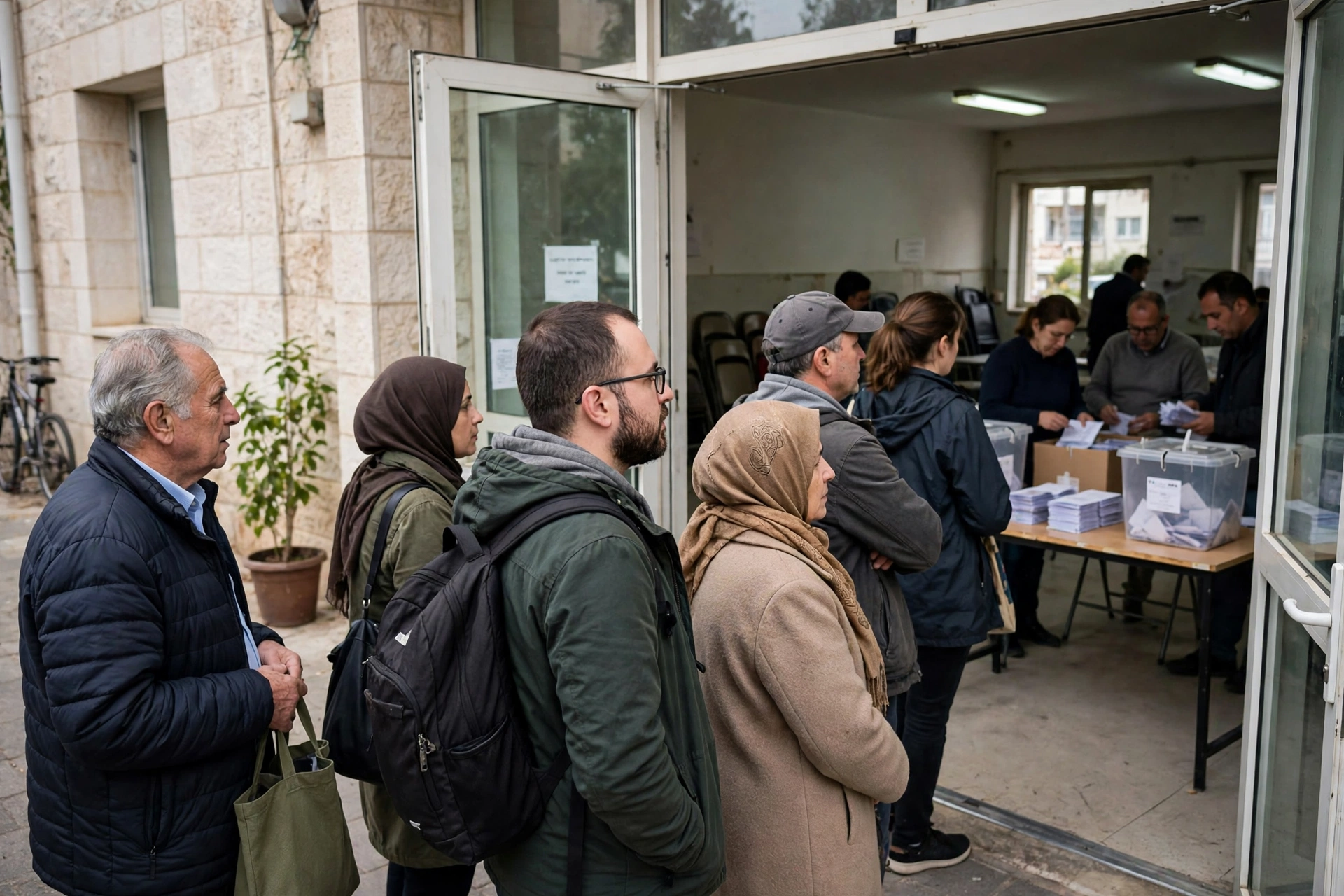
Turnout climbed to its highest point in more than half a century, Central Elections Committee data showed, in Israel’s first election since the October 7, 2023 attacks. Markets reacted nervously to the prospect of deadlock: the shekel weakened against the dollar and the Tel Aviv stock exchange slipped, reports said.
What happens next
Once results are finalised, Israel’s president consults representatives of the parties before selecting the candidate considered most likely to secure a majority. That candidate is given 28 days to negotiate a coalition agreement, with 14 more days possible.
If neither Netanyahu nor Eisenkot can assemble 61 seats, Israel could face prolonged negotiations — or another election. For the wider region, the outcome matters: the next government will shape the next phase of the war, the future of Gaza’s reconstruction, and relations with Washington at a moment of acute tension with Iran.