

RAS AL KHAIMAH — Sunday, October 25, 2026. Ras Al Khaimah has closed all of its beaches until further notice after an oil slick from a stricken tanker began washing ashore, extending a coastal shutdown that has now reached three emirates along the United Arab Emirates’ northern Gulf coast.
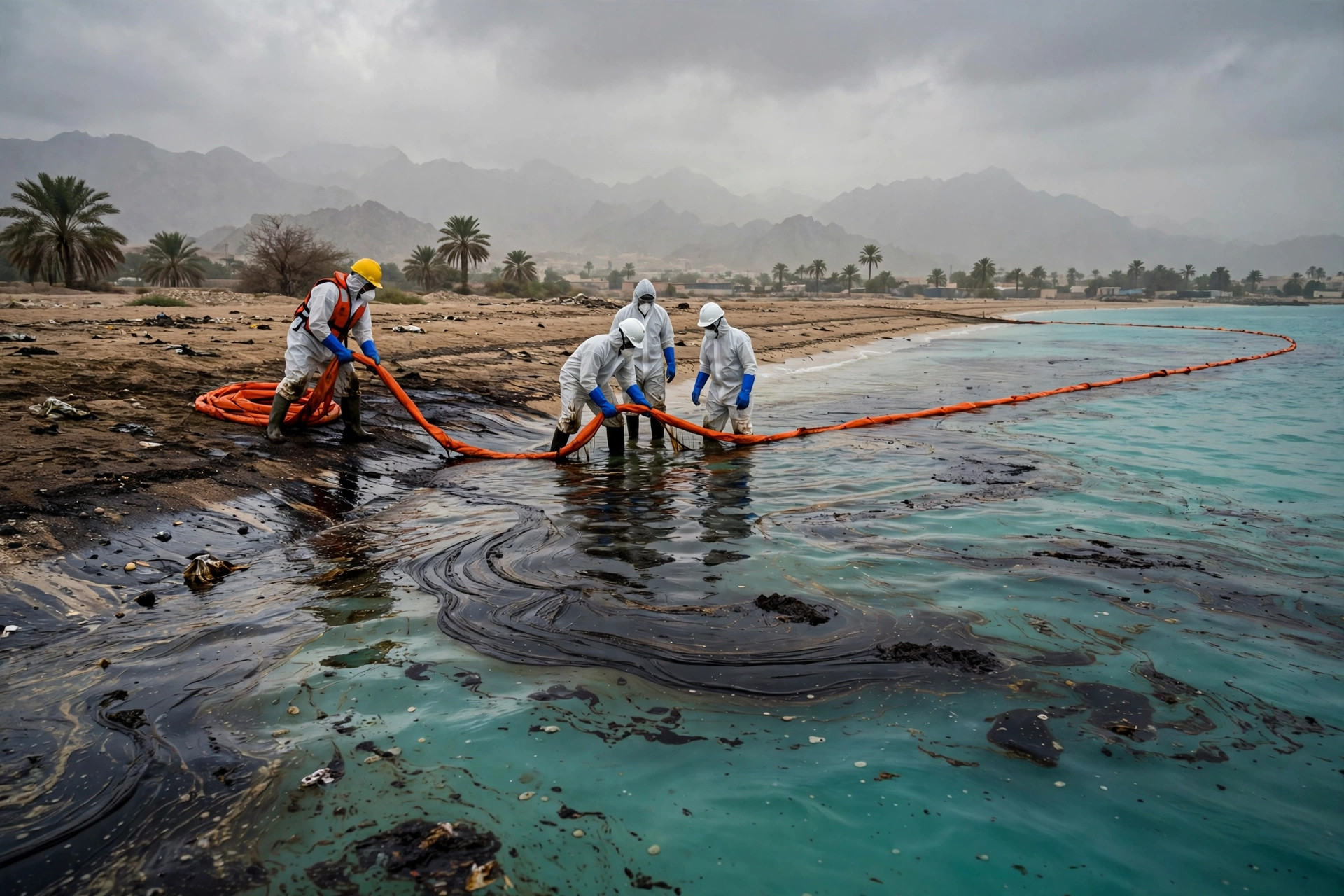
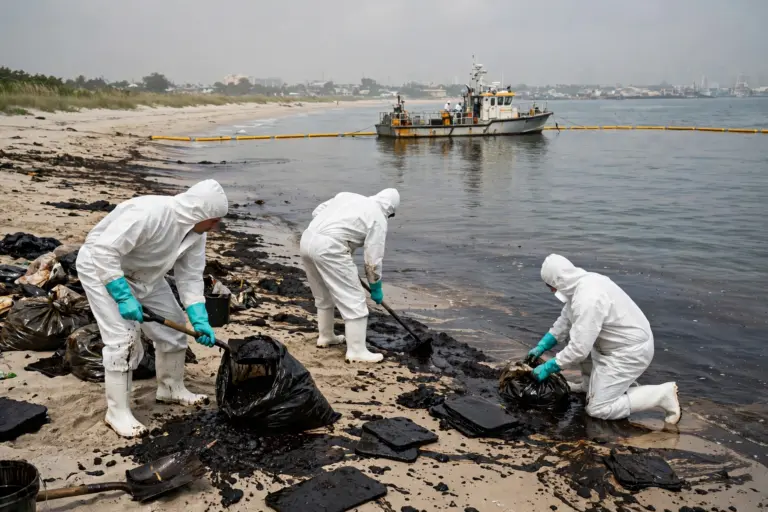
The closure, announced on Saturday, followed shutdowns in neighbouring Umm Al Quwain, where all beaches and coastal areas were closed, and in Sharjah, where Al Hamriyah Beach was shut as a precaution. Footage of dark oil reaching the shoreline circulated on Sunday as clean-up teams worked along the coast.
Beaches closed until further notice
Ras Al Khaimah’s Public Services Department announced the closures in a statement shared by Ras Al Khaimah Police General Headquarters, state media reported. The statement gave no reason for the closure and set no date for reopening.
The UAE Ministry of Climate Change and Environment has confirmed that oil is leaking from a tanker offshore and that containment and clean-up operations are under way, alongside an environmental assessment of the affected coastline. The ministry has urged fishermen and other sea users to avoid affected areas and follow official instructions.
Residents in Sharjah, Ajman and Umm Al Quwain have reported a strong fuel-like smell in recent days. The environment ministry has said the odour poses no health risk, though it remains under investigation, according to reports.
Slick traced to stricken tanker
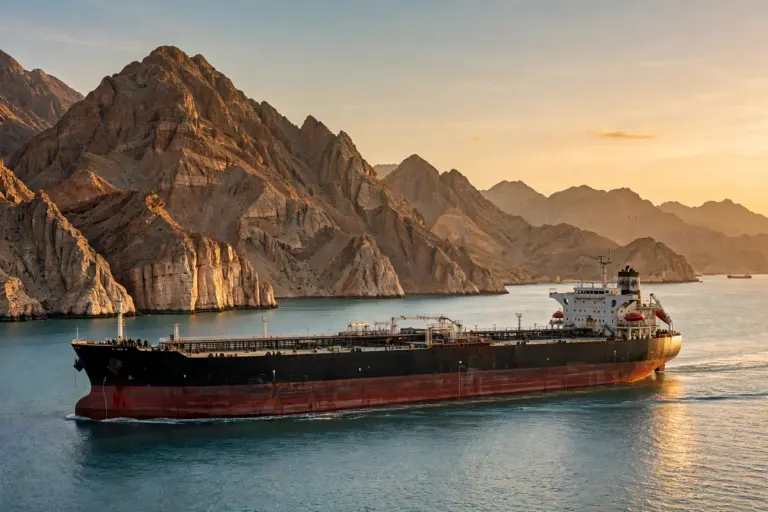
UAE authorities have not officially named the tanker involved, nor have they publicly confirmed what caused the leak. Maritime analysts, however, have linked the slick to the Panamanian-flagged crude carrier Gem No. 2, struck about two weeks ago off the UAE coast, trade sources said.
The vessel caught fire after being hit on October 9, and all 22 Indian crew members were rescued, according to earlier maritime reports. Analysts cited by Reuters and by the Dutch peace organisation PAX say the tanker has been leaking since, producing a slick estimated at roughly 90 kilometres long, with satellite assessments putting the affected area at around 160 square kilometres. The quantity of oil released has not been confirmed.
A coastline under strain
The northern UAE coastline now closed includes resort beaches in Ras Al Khaimah, home to luxury hotels and the planned casino resort on Al Marjan Island, as well as fishing grounds and ecologically sensitive shallows. Researchers warn the affected waters support dugongs, dolphins and sea turtles, along with coral reefs, mangroves and seagrass meadows.
Concern has also been raised about coastal infrastructure, including desalination plant intakes, in a country that relies heavily on desalinated water. No contamination of drinking water supplies has been reported, and authorities say monitoring is continuing.
What happens next
For now, the closures stand without a reopening timetable. Authorities in all three emirates say beachgoers should stay away from restricted areas until technical teams complete their assessments and determine what further safety and marine protection measures are needed.
The full environmental impact will only become clear once containment work is complete and coastal surveys are finished, officials said. Until then, the slick’s spread — and the unanswered question of which vessel the authorities will name — will keep the UAE’s northern beaches closed and coastal communities watching the water.