

DUBAI — October 22, 2026 — The United Arab Emirates has formally nominated veteran diplomat Lana Nusseibeh as a candidate for the next secretary-general of the United Nations, injecting one of the Arab world’s most experienced envoys into a deadlocked race to succeed Antonio Guterres.
The nomination was submitted in a letter from UAE President Sheikh Mohamed bin Zayed Al Nahyan to the presidents of the UN General Assembly and Security Council, state media reported. Nusseibeh, the UAE’s minister of state for foreign affairs who represented the country at the UN for more than a decade, has taken a leave of absence from her government post to pursue the candidacy.
Breaking a deadlock
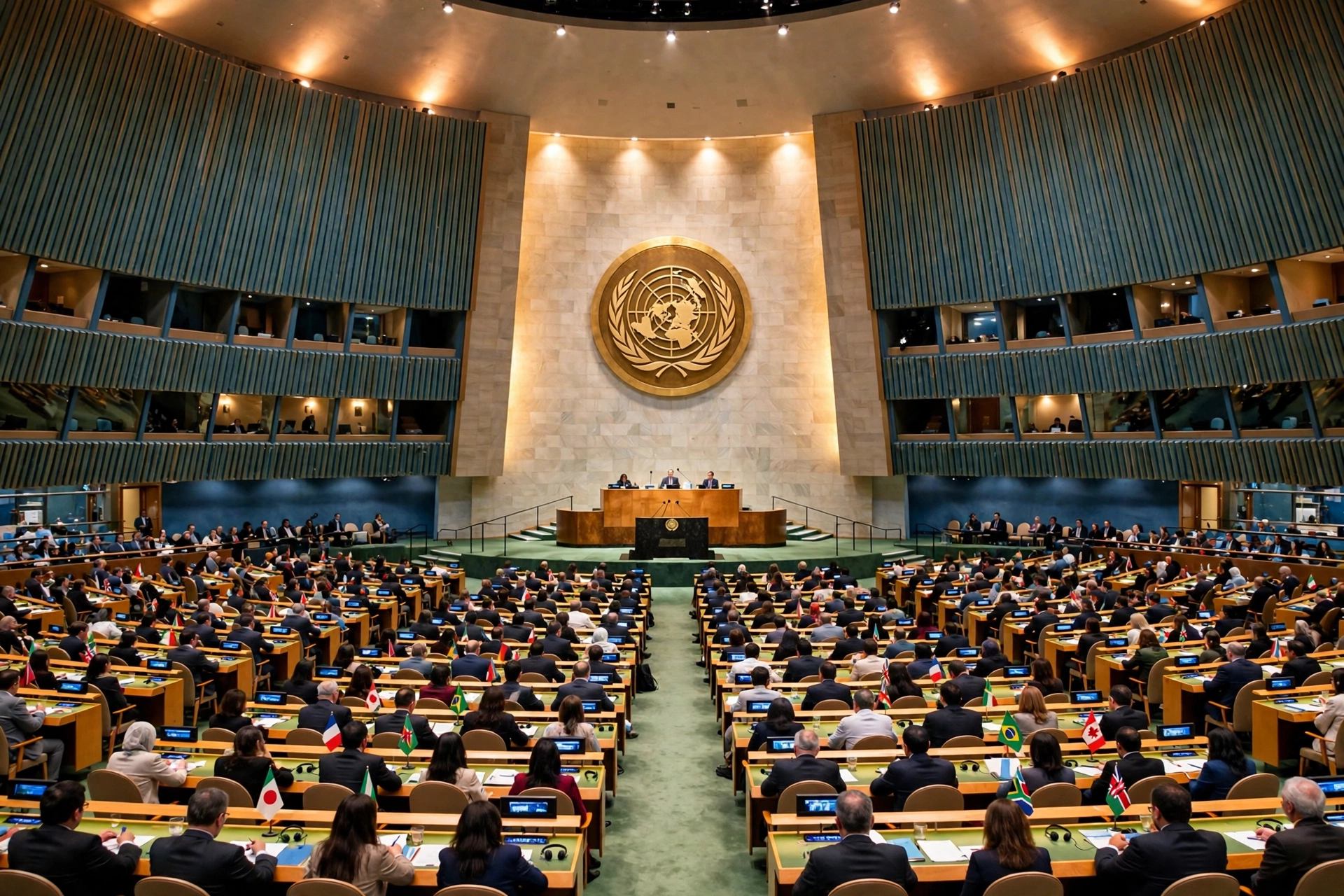
The announcement lands amid an unusually fraught selection process. The Security Council’s latest straw poll, held on October 16, left every candidate effectively vetoed, with none securing the backing of all five permanent members — the United States, Britain, France, Russia and China — diplomats said. Six rounds of voting in the council have so far failed to produce an acceptable successor.
Reports suggest the administration of US President Donald Trump has opposed all seven contenders entered in the race to date. But the UAE’s unusually warm relationship with Washington — and working ties with Moscow, Beijing, London and Paris — has prompted speculation in New York that Nusseibeh could finally break the impasse, diplomats said.
A veteran of the UN system
Nusseibeh served as the UAE’s permanent representative to the United Nations from 2013 to 2024, one of the longest-serving ambassadors on the world body’s circuit. During that period she presided over the Security Council in 2022 and 2023, steering negotiations on conflicts from Syria to Sudan, and she represented Abu Dhabi during the UAE’s two-year elected term on the council.
In her vision statement, Nusseibeh said she had spent much of her professional life “working in and around the United Nations” and had seen first-hand what determined diplomacy could achieve. She vowed to serve “speaking frankly with every government and answering to none,” and called the moment one to “act with greater urgency: to act earlier, bring people together across difference, and drive the work forward until it produces concrete results.”
The veteran diplomat also described herself as a “stubbornly optimistic, relentless diplomat,” noting that her two young sons had taught her more about patience and urgency than any negotiation.
First woman, second Arab
If elected, Nusseibeh would become the first woman ever to lead the United Nations — and only the second Arab to hold the post after Egypt’s Boutros Boutros-Ghali, who served from 1992 to 1996. She is one of several women among the candidates, alongside Costa Rica’s Rebeca Grynspan, widely described as an early frontrunner.
Guterres’s second five-year term ends on December 31, leaving member states barely two months to agree. To win, a candidate must secure at least nine votes in the 15-member Security Council, avoid a veto from any permanent member, and then win confirmation in the General Assembly of all 193 member states.
UAE officials said the nomination reflects the country’s growing footprint in global diplomacy and Nusseibeh’s record on humanitarian issues, conflict resolution and women’s rights. How the permanent members respond to her candidacy in the coming rounds of voting will determine whether the Emirates’ gamble ends the deadlock — or deepens it.