

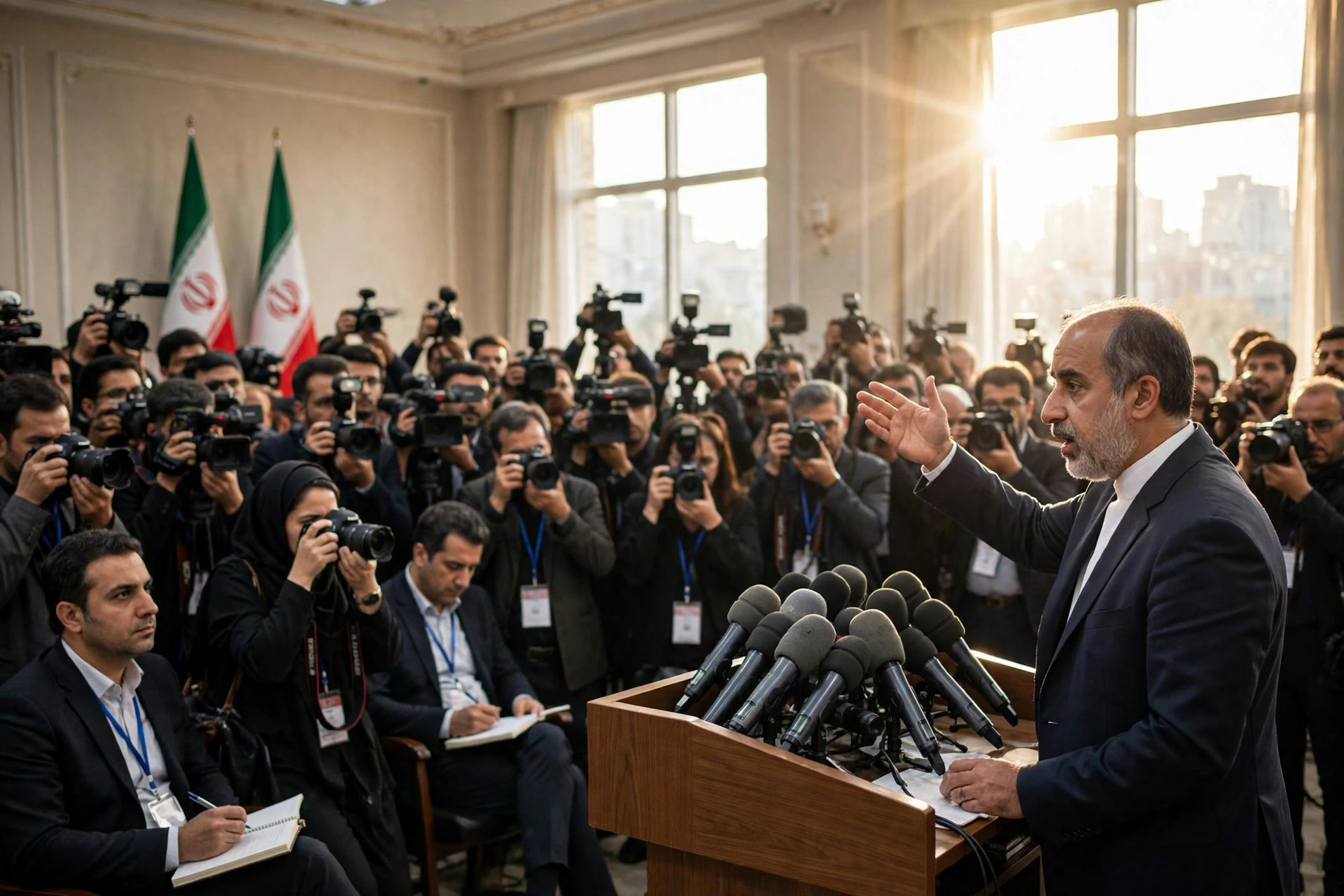
TEHRAN, October 17, 2026 — Iran on Friday flatly rejected Saudi Arabia’s accusation that it had encouraged Yemen’s Houthi rebels to escalate cross-border attacks against the kingdom, calling the allegation “not credible” and renewing a standing offer to mediate between Riyadh and the rebels.
The denial from Iranian foreign ministry spokesman Esmaeil Baqaei landed a day after a senior Saudi official publicly accused Tehran of stoking the latest escalation in a conflict that has pulled the region toward a wider war. It was the first direct diplomatic exchange between the two regional rivals since the latest round of hostilities erupted — and a sign that both sides are still talking, if only at each other.
The Saudi charge
On Thursday, Saudi Arabia’s deputy minister for public diplomacy, Dr Rayed Krimly, said Iran had “encouraged” the escalation by the Houthis, accusing Tehran of continuing to arm, train and support the group in violation of United Nations Security Council resolutions. Krimly also said the Houthis had rejected a Saudi offer to meet in Oman at the outset of the latest round of fighting.
The Saudi-led coalition fighting in Yemen has reported a wave of Houthi attacks on the kingdom in recent days, including strikes on airports, ports, oil facilities and shipping in the Red Sea. On Friday, the coalition said its air defences had intercepted three drones over the southern region and Riyadh, two cruise missiles over the Red Sea, and a ballistic missile over Yanbu, the Red Sea city that hosts the terminus of the kingdom’s east-west oil pipeline.
Tehran’s response
In a statement issued on Friday, Baqaei said Iran rejected any claim that it had played a role in Houthi operations. Yemen’s armed forces, he said, act according to their own interests and assessments — and such claims were not credible, in his words, “to those familiar with relations between Iran and its friends.”
The spokesman added that Tehran did not consider an escalation of tensions to be in the interests of any party, and reiterated that Iran had “always been ready to use its good offices” to help bring the hostilities to an end — a formal renewal of a mediation offer Tehran has floated since the current crisis began.
The language echoed Iran’s broader posture since the conflict flared back to life in July, when the Houthis declared a naval blockade of Saudi ports and shipping through the Bab al-Mandeb Strait. Tehran has consistently insisted the group operates independently while condemning any widening of the war.
The pressure builds
The diplomatic sparring comes as the region absorbs a series of blows. The UN Security Council on Thursday condemned the escalating Houthi attacks on Saudi Arabia in the strongest terms and affirmed the kingdom’s inherent right to self-defense — the body’s toughest response yet. Thirteen people were killed in a single attack on Riyadh’s King Khalid International Airport last week, and flight disruptions have rippled across the Gulf, stranding thousands of workers.
Even Pakistan, which signed a mutual-defence pact with Saudi Arabia in September, sidestepped the blame question on Friday: Islamabad’s foreign ministry spokesman reaffirmed support for the kingdom’s right to self-defense while declining to endorse the claim that Iran was behind the Houthi operations — a careful balancing act between two regional allies.
What comes next
Whether Tehran’s mediation offer gains traction is an open question. Previous rounds of Saudi-Houthi talks, brokered in Oman, produced a 2022 UN-backed truce that held for years before collapsing this summer. Analysts said the latest exchange suggested both sides were positioning for any future negotiations — Riyadh by raising the diplomatic cost of the attacks, Tehran by casting itself as a would-be peacemaker.
For now, the missiles continue to fly even as the words are exchanged — and the region waits to see whether this war of statements turns into a genuine opening for talks, or simply the latest prelude to more fire.