

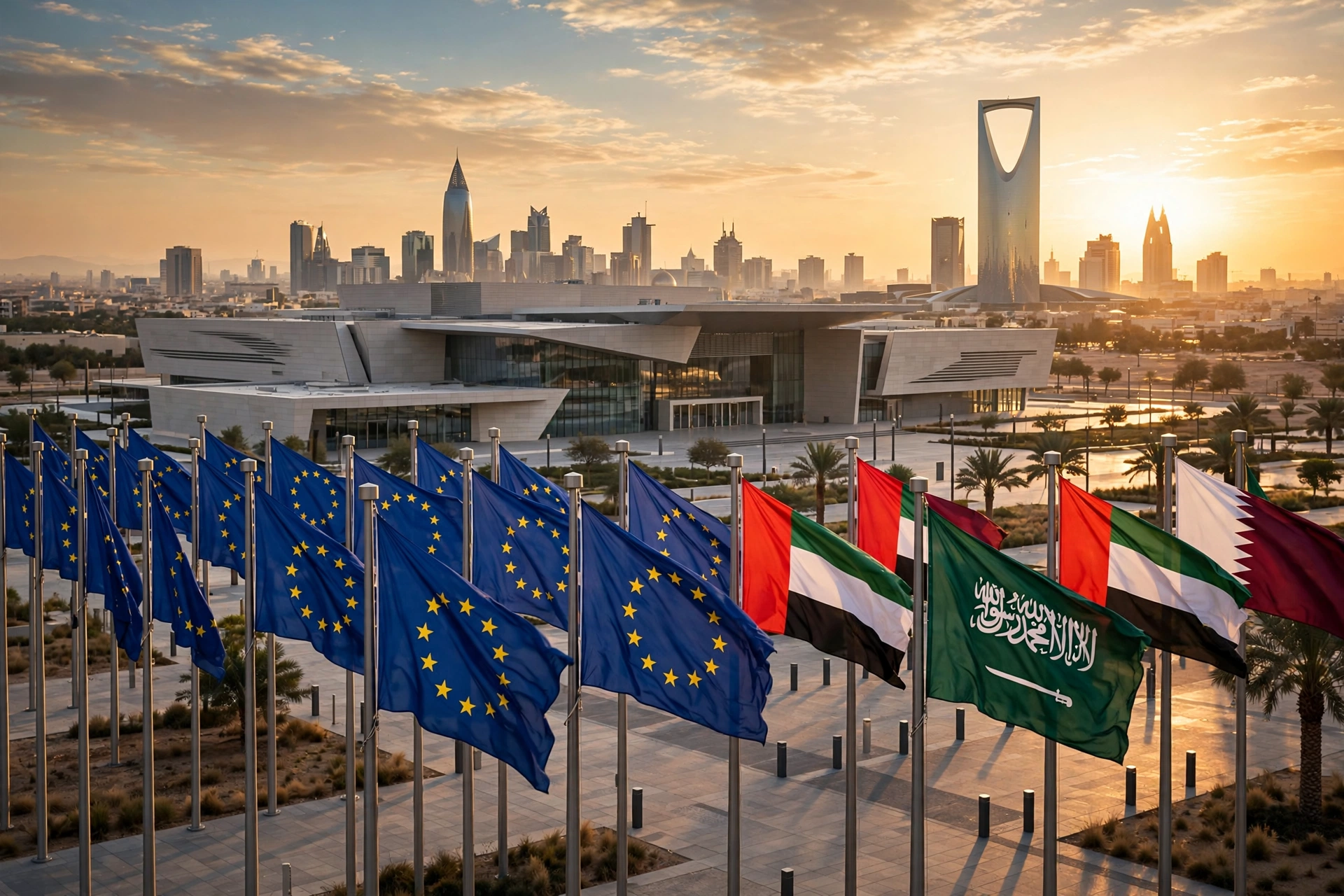
RIYADH, October 16, 2026 — The European Union and the Gulf Cooperation Council have postponed their joint summit scheduled for October 24 in Riyadh, as sustained Houthi attacks on Saudi Arabia and the extended closure of King Khalid International Airport raised security fears for visiting delegations.
Jasem Mohamed Albudaiwi, Secretary-General of the GCC, announced the rescheduling in a statement on Friday, saying the decision was made in view of what he called the continued attempts by the Houthi group to target Saudi Arabia and its civilian infrastructure. He cited the ongoing suspension of operations at Riyadh’s main airport and concern for the safety of participating delegations. A new date will be agreed upon by the GCC and European sides, the statement said.
The European Council confirmed the postponement in a press release on Thursday, saying the second EU-GCC summit had been postponed and that “a new date will be announced in due course.” The Council added that the partnership “is of great strategic importance to both regions” and that the EU remains committed to deepening ties with the Gulf.
A leak from Brussels
Word of the delay first broke in Brussels, where two sources familiar with the matter told Reuters on Thursday that the summit would be postponed. The remarks followed comments from Bulgarian Prime Minister Rumen Radev, who said on arrival at an EU leaders’ summit that he understood the Riyadh meeting would be “postponed, maybe for security reasons.”
EU foreign policy chief Kaja Kallas told reporters in Brussels that discussions about the summit were ongoing. “You will hear when there is something to announce,” she said, according to Reuters.
High stakes, high symbolism
This year’s gathering was to be only the second summit between the 27-member EU and the six Gulf states — Saudi Arabia, the UAE, Qatar, Kuwait, Oman and Bahrain — following the inaugural meeting in October 2024. Talks were expected to advance trade, energy and security cooperation at a time when the Middle East war is battering Gulf economies and threatening Europe’s energy supplies.
Analysts said the postponement is the latest sign of how far the security situation has deteriorated in Saudi Arabia. The kingdom has come under weeks of Houthi drone and missile attacks, including a strike on Riyadh’s King Khalid International Airport on October 10 that killed at least 13 people and wounded hundreds, according to media reports. The airport remains closed, with flight suspensions repeatedly extended, and airlines across the region have cancelled thousands of services to the kingdom.
Adding to the diplomatic pressure, a senior Saudi official earlier this week accused Iran of arming, training and supporting the Houthis “in violation of UN Security Council resolutions,” state media reported — a charge Tehran routinely rejects.
What comes next
Officials on both sides stressed the postponement is temporary. Albudaiwi said the GCC and the EU would work together to create “the appropriate conditions” for holding the summit, framing it as a rescheduling rather than a cancellation. Diplomats in Brussels said planning would resume once security conditions allow, though no timeline has been given.