

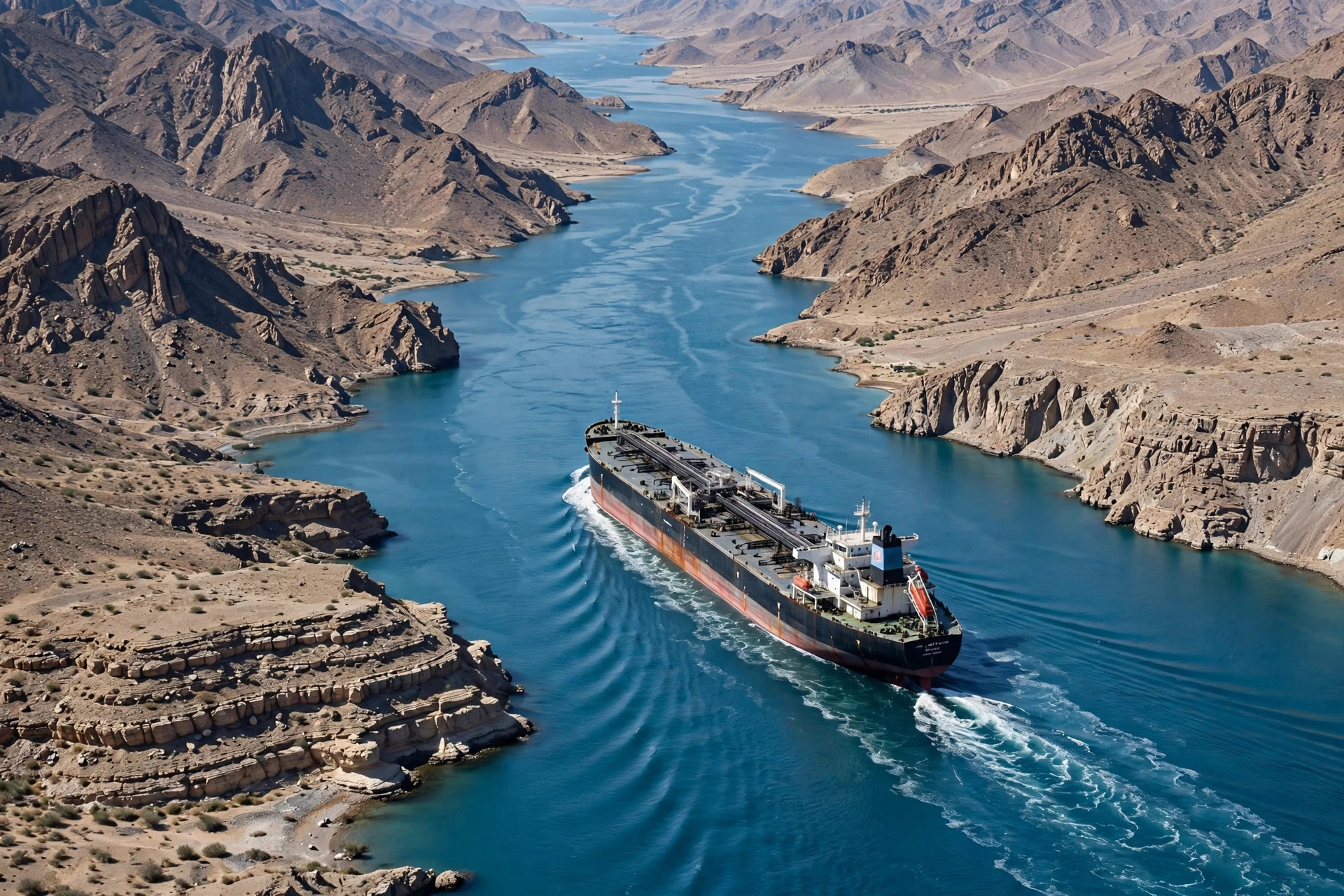
MUSCAT — Iran and Oman have agreed on the coordinates of designated safe transit routes through the Strait of Hormuz, a breakthrough Tehran says it will present to international maritime authorities as the U.S.-Iran war grinds on.
The announcement came Thursday from Iranian Foreign Ministry spokesman Esmaeil Baghaei, who said technical delegations from both countries finalized the waypoint coordinates after weeks of talks in Muscat, long the region’s quiet diplomatic backchannel between Washington and Tehran.
“We have completed the technical work with our Omani brothers,” Baghaei told reporters in Tehran. “The agreed coordinates will be submitted to the International Maritime Organization so that shipping companies can navigate the strait safely and with confidence.”
A seven-mile temporary corridor
According to officials briefed on the arrangement, the routes define a temporary seven-mile-wide corridor threading through the strait’s narrowest passages, with designated inbound and outbound lanes kept clear of military operations. Vessels transiting within the marked coordinates would receive a deconfliction assurance from Iranian naval forces, while Oman has pledged to share real-time monitoring data from its coast.
Muscat has long played the role of intermediary in the Gulf, hosting the secret talks that led to the 2015 nuclear deal, and Omani officials framed the new corridor as a humanitarian and commercial measure rather than a political settlement.
US Central Command pushes back
The announcement drew a swift and skeptical response from U.S. Central Command, which rejected any suggestion that the waterway is closed or that transit requires Iranian permission. A CENTCOM spokesperson said U.S. naval forces would continue to operate in international waters and to guarantee freedom of navigation, warning that unilateral declarations by Tehran could not substitute for international law.
American officials, speaking on condition of anonymity, said Washington viewed the corridor as an attempt by Iran to normalize restrictions on a strait through which roughly a fifth of global oil consumption passes each day.
Diplomacy through mediators
With direct talks between Washington and Tehran frozen since fighting began, the agreement underscores how diplomacy now travels through intermediaries. Oman and other regional states have carried messages between the two capitals, and Iranian officials say they will answer U.S. war proposals through the same channels rather than at a negotiating table.
Iranian President Masoud Pezeshkian backed the announcement, saying Tehran remained committed to “constructive diplomacy” even while defending its sovereignty. “The Islamic Republic does not seek escalation, but it will not retreat from its rights,” Pezeshkian said, according to state media.
Analysts cautioned that coordinates on paper will mean little without de-escalation at sea. Several tankers have been harassed or seized in and around the strait in recent months, and maritime insurers still classify the waterway as a high-risk zone. But for oil markets and Gulf states alike, the Muscat agreement offered the first concrete sign that the region’s most dangerous flashpoint might yet be managed.
Iran’s mission to the United Nations said it would transmit the coordinates to the IMO in the coming days, inviting all littoral states and shipping companies to adhere to the designated lanes.