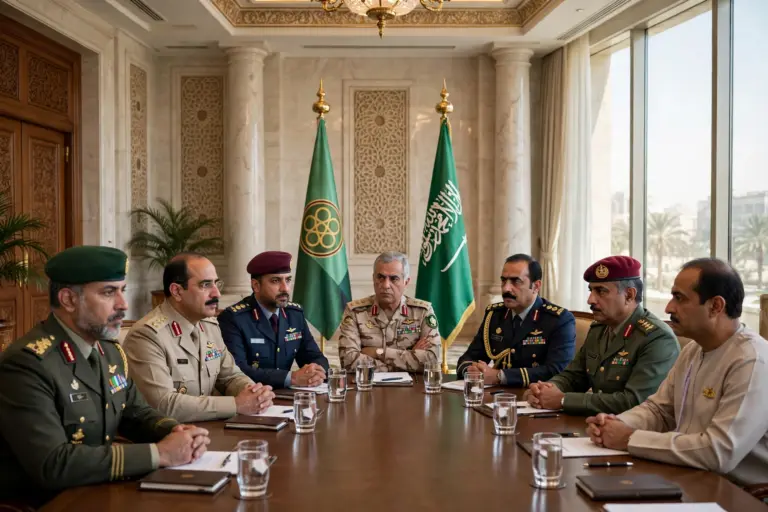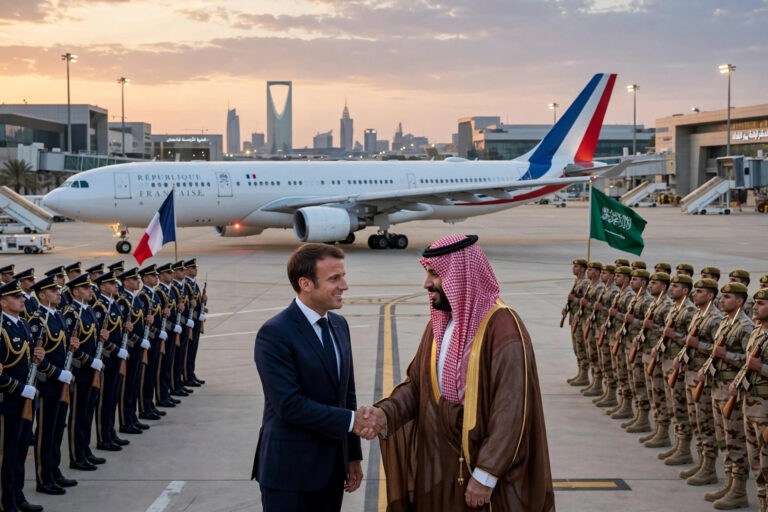


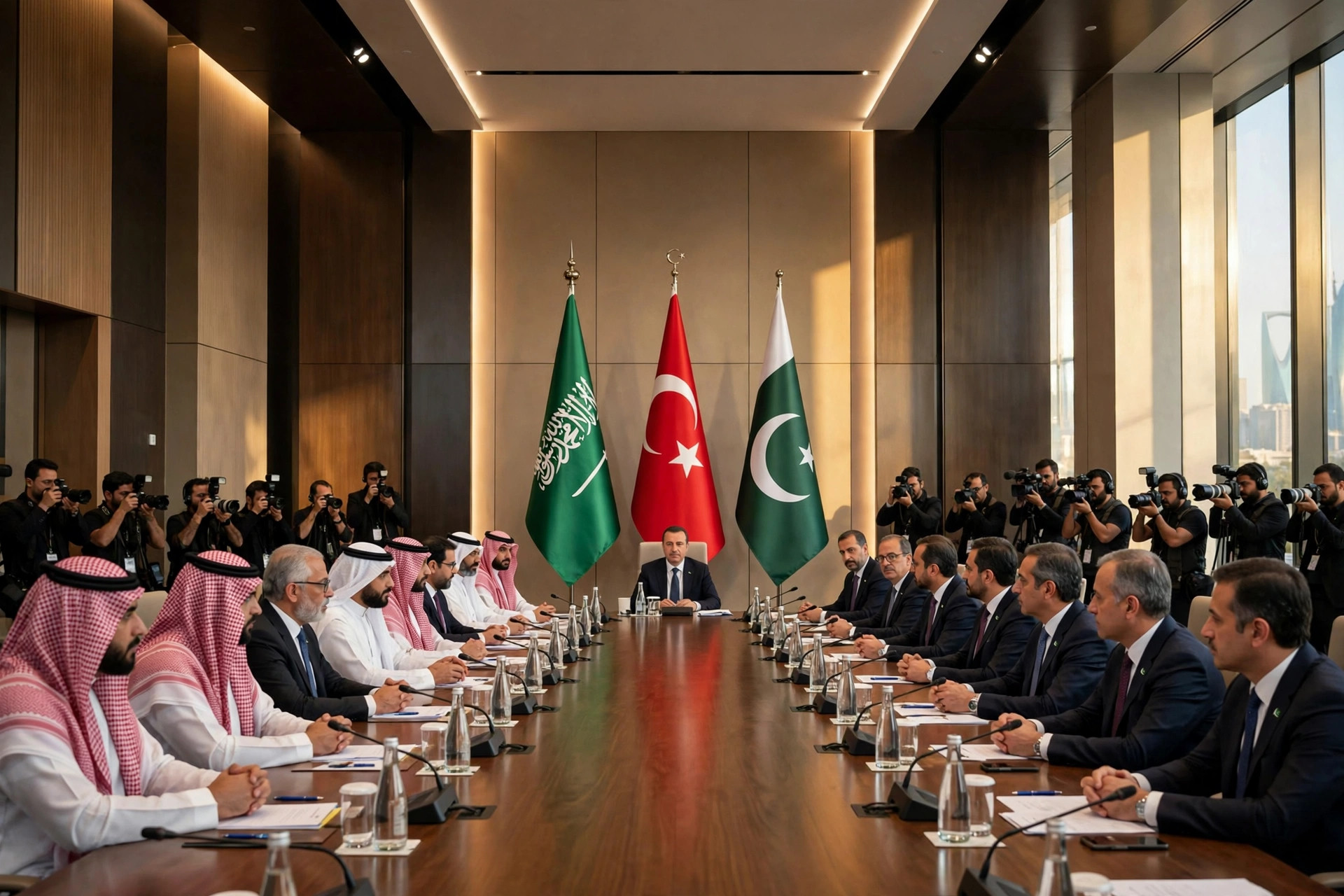
RIYADH, October 5, 2026 — The strategic political and defence committee of the Makkah Defence Alliance — the trilateral pact binding Turkey, Saudi Arabia and Pakistan — is holding talks in Riyadh today, convening for the first time amid a sharp escalation of the Yemen war and a wave of missile and drone attacks on Saudi territory.
Ankara’s announcement set the stage: the Turkish foreign ministry said on Sunday that Foreign Minister Hakan Fidan, Defence Minister Yasar Guler and Chief of the General Staff General Selcuk Bayraktaroglu would travel to the Saudi capital for the committee’s session, joined by senior officials from Pakistan and Saudi Arabia.
A Pact Forged in August Faces Its First Test
The three countries signed the Makkah trilateral agreement on August 7, 2026, establishing the Makkah Defence Alliance — a framework for collective security and defence cooperation whose central clause treats an armed attack against any one member as an attack against all three.
According to the Turkish statement, Monday’s talks in Riyadh “will address recent developments in the region and the stage reached in the Alliance’s institutionalisation efforts” — diplomatic language that covers both an urgent security agenda and the longer project of building the pact’s permanent structures.
The Yemen Offensive and the Houthi Question
The timing could hardly be more charged. The meeting comes a day after President Rashad al-Alimi, the head of Yemen’s Saudi-backed government, announced the start of a major military operation aimed at retaking territory held by the Houthis — a campaign the Saudi-led coalition has pledged to back with full operational support.
It also follows weeks of Houthi missile and drone attacks on the kingdom. Pakistan’s Deputy Prime Minister and Foreign Minister Ishaq Dar said earlier this week that Saudi Arabia had faced some 17 to 18 attacks, and that an emergency meeting under the agreement would be convened to review the situation.
Dar also revealed on Friday that Iran had suggested engaging Yemen’s Houthis politically after the attacks — an idea the committee is expected to discuss in Riyadh this week. Islamabad has stressed that it remains committed to defending Saudi Arabia, with officials noting that collective defence arrangements are permitted under the United Nations Charter.
Islamabad and Ankara Close Ranks
Pakistan’s Defence Minister Khawaja Asif has likewise condemned the Houthi attacks on the kingdom and reiterated Islamabad’s support for Riyadh in the event of further aggression, state media reported.
For analysts in the region, the Riyadh session is being read as the first real stress test of the August pact: whether the alliance can coordinate a unified response to the Houthi threat while keeping a door open to the political track Tehran is floating.
The committee’s conclusions are expected to shape the next steps in the alliance’s institutionalisation — from joint planning mechanisms to standing consultations — as the three capitals weigh how far collective defence must now go.