


DUBAI, October 3, 2026 — The United States is rushing a third aircraft carrier strike group to the Middle East, one of the largest American naval buildups in the region in more than two decades, as President Donald Trump weighs renewed strikes against Iran, US officials and media reports said.
The nuclear-powered USS Theodore Roosevelt departed its San Diego home port on Sunday, September 27, bound for US Central Command’s area of operations, which spans the Middle East, The Wall Street Journal reported Thursday. The carrier strike group — with its air wing, destroyers and the guided-missile cruiser USS Chosin — is expected to arrive by the end of November, bringing between 9,000 and 10,000 sailors and Marines into the theatre, officials told US media.
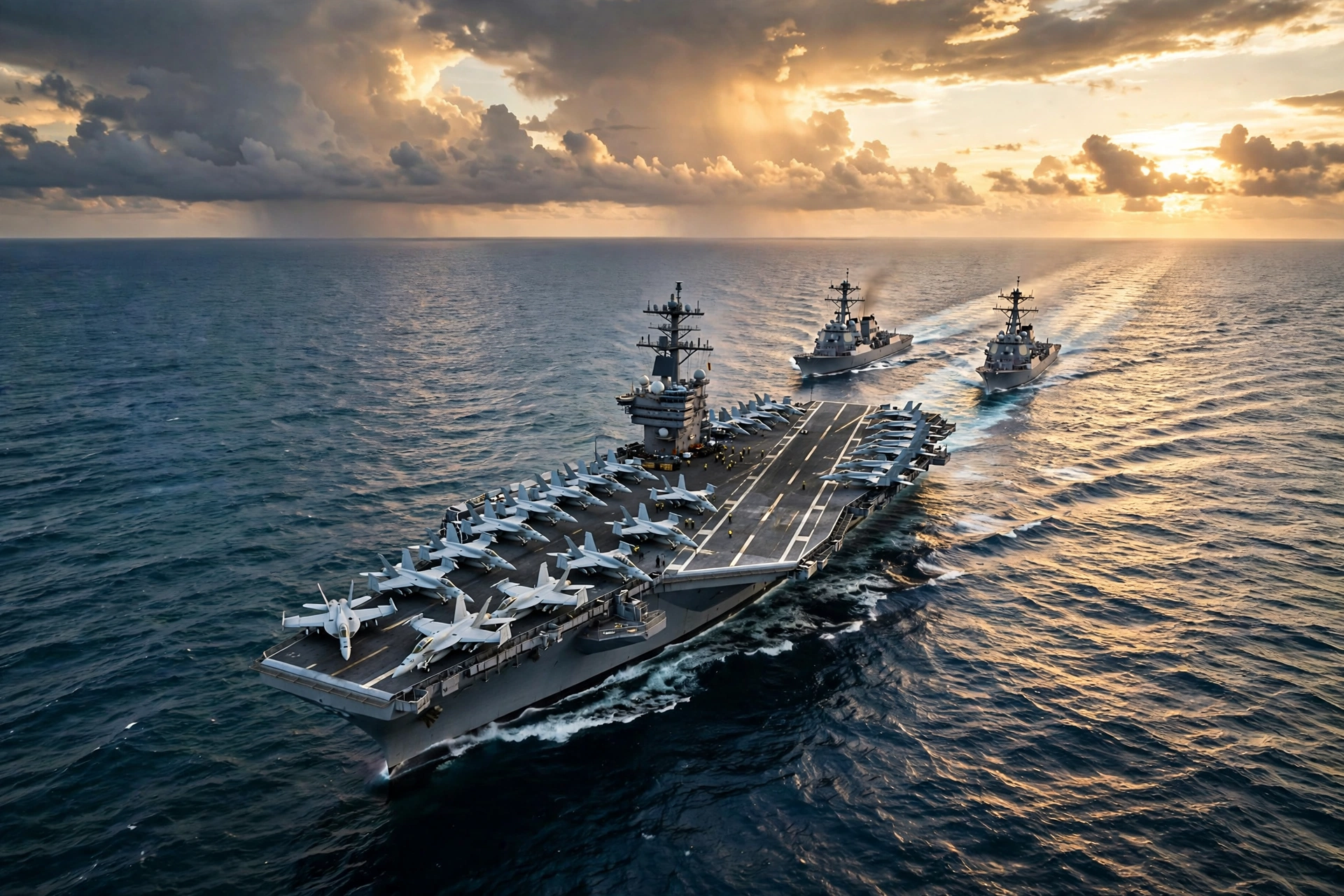
A day after the Roosevelt sailed, the USS Makin Island amphibious readiness group also set off for the region with roughly 2,200 Marines of the 13th Marine Expeditionary Unit aboard the landing ships USS John P. Murtha and USS Anchorage, according to US officials cited by Bloomberg. The two formations together carry more than 7,000 sailors and about 2,000 Marines.
Largest buildup since 2003
Once they arrive, the Roosevelt group will join the USS George H.W. Bush and the USS George Washington, which are already operating in the Arabian Sea and adjacent waters alongside the USS Boxer amphibious group and several destroyers, Gulf News reported. If all three carrier strike groups remain in theatre at once, the region would host three US carriers simultaneously for the first time since April — and, before this year’s operations against Iran, the first time since the 2003 invasion of Iraq, Bloomberg reported.
The National reported that the Roosevelt is expected to relieve the Washington, which has been deployed since August after replacing the USS Abraham Lincoln. Conditions aboard the Lincoln had deteriorated after months at sea; the Navy’s acting secretary disclosed last week that eight service members in the carrier strike group had attempted suicide during the deployment.
US Central Command declined to confirm the movements, saying in a statement that it does not discuss unit schedules “for operational security reasons.”
Trump keeps strikes on the table
The buildup comes as diplomatic efforts to end the eight-month-old US-Iran conflict stall. The two sides held indirect talks on the sidelines of last week’s UN General Assembly in New York, but Tehran and Washington have traded threats even as both say they want to avoid an all-out regional war, Al Jazeera reported.
Trump told the UN General Assembly last week he faced a choice between pursuing a deal with Iran or driving the country “into hell,” and in an interview published Thursday he said he could resume military attacks on Iran after the US midterm elections in early November if no deal is in place. “Either Iran signs the agreement, or it will no longer exist,” he said Thursday, according to Haaretz.
Iranian President Masoud Pezeshkian responded Thursday that Tehran has “never shied away from talks, and we never will.”
The naval buildup follows the quiet deployment of two additional US Patriot missile batteries to the region in recent weeks — one to shield a Saudi oil facility and one to protect a Qatari gas site — which Axios reported Friday was meant to reassure Gulf allies and defend energy infrastructure in case Trump orders new attacks.